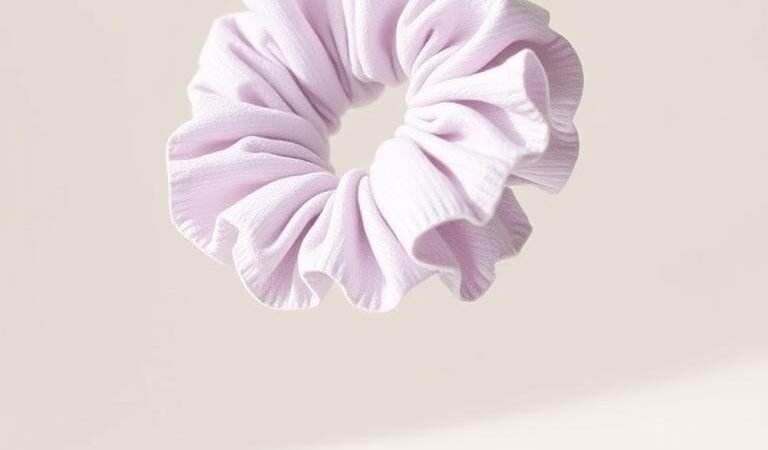
Scrunchies have made a significant comeback in the world of fashion, and it’s easy to see why. These versatile hair accessories can be worn with various hairstyles and are suitable for different hair types. With a simple DIY approach, you can create your own personalized scrunchies using your favorite fabric.
Creating a scrunchie is a fun and easy project that requires minimal sewing experience. You can make one in under 30 minutes using basic materials. This project is perfect for using up fabric scraps from other sewing projects, making it a great way to get creative and reduce waste.
Key Takeaways
- Create personalized scrunchies with your favorite fabrics
- Make a scrunchie in under 30 minutes with basic materials
- Suitable for different hair types and styles
- Perfect for using up fabric scraps from other sewing projects
- Easy DIY project for beginners with minimal sewing experience
What You’ll Need to Make DIY Scrunchies
To get started with your DIY scrunchie project, you’ll need to collect a few basic supplies. Making scrunchies is a fun and rewarding DIY project that requires some essential materials.
Fabric Options for Scrunchies
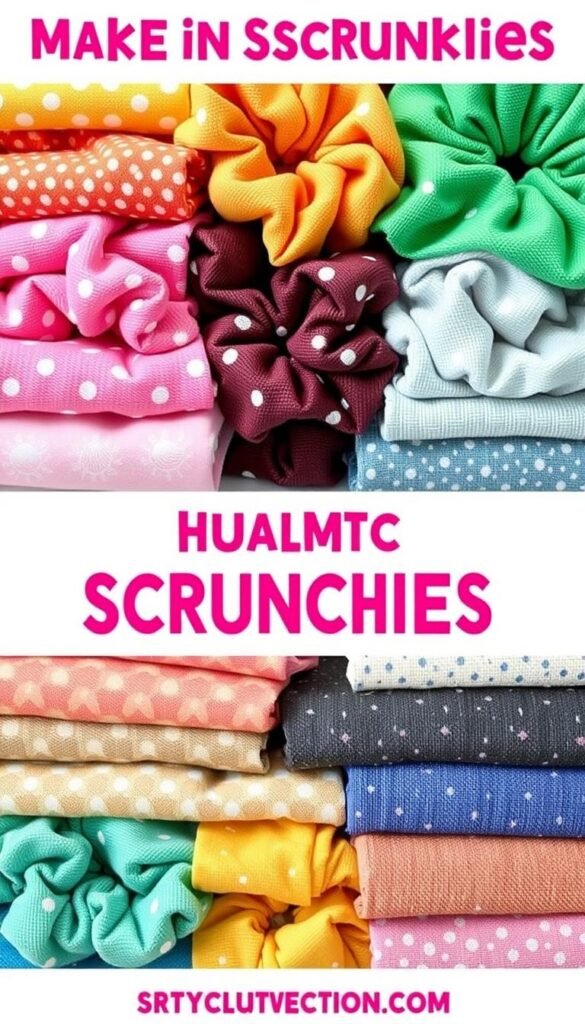
Choosing the right fabric is crucial for making comfortable and stylish scrunchies. For a scrunchie, you’ll want a fabric that is soft, breathable, and gentle on hair. Cotton and silk are popular choices due to their comfort and durability. You can also experiment with different patterns and textures to add a personal touch to your scrunchies.
Essential Tools and Materials
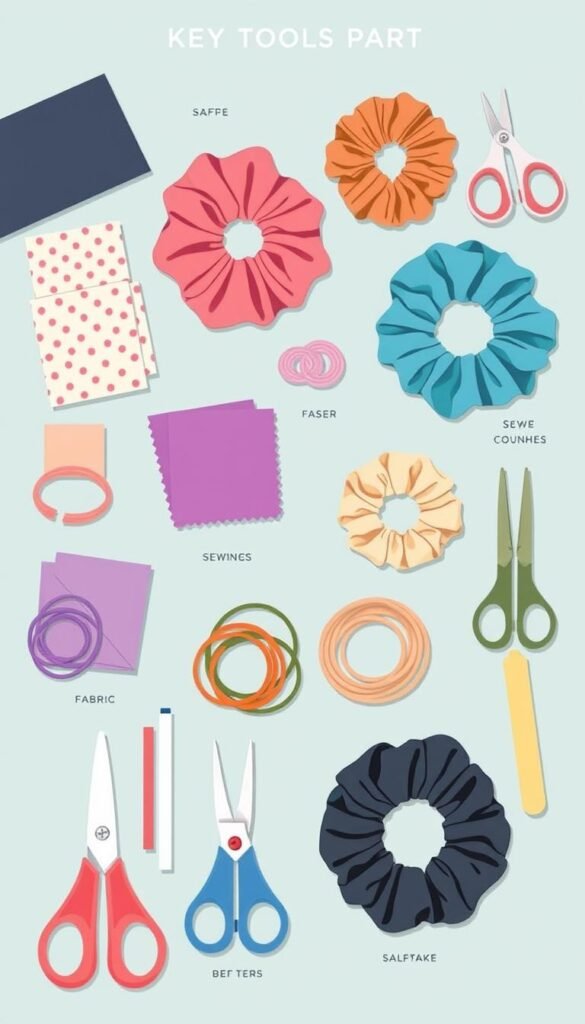
To make a scrunchie, you’ll need a few essential tools and materials. These include:
- Elastic – The length of elastic needed can vary depending on the size of the scrunchie you want to make. Typically, 6-9 inches of elastic is sufficient, with thicker hair requiring longer lengths.
- Safety Pin – A safety pin is crucial for turning the fabric tube inside out and threading the elastic through.
- Sewing Machine – While not mandatory, a sewing machine can significantly speed up the process. For beginners, setting the machine to a straight stitch with appropriate tension is recommended.
- Fabric – As mentioned, the choice of fabric is important. Pre-washed fabric is best to prevent shrinkage after the scrunchie is completed.
Optional tools like a tube turner and fabric glue can also make the process easier. Creating a simple paper pattern can help achieve consistent scrunchie sizes. Organizing all materials before starting can streamline the process.
How to Make Scrunchies: Step-by-Step Instructions
Now that you have all the necessary materials, it’s time to dive into the step-by-step process of making your very own scrunchie. This tutorial will guide you through each stage, from cutting your fabric to finishing your scrunchie.
Cutting and Preparing Your Fabric
Begin by cutting your fabric into a rectangle, approximately 8-10 inches wide and 4-5 inches high, depending on the size of scrunchie you prefer. Ensure the fabric is cut in the right direction to avoid any distortion. Fold the fabric in half lengthwise, right sides together, and pin the edges to secure them.
Sewing the Fabric Tube
Sew along the pinned edge using a 1/4-inch seam allowance, creating a tube. Be sure to backstitch at the beginning and end of your seam to secure it. Turn the tube right side out and press the seam flat with an iron.
Adding the Elastic
Cut a piece of elastic to the desired length, typically around 6-8 inches, depending on your hair type and preferred tightness. Thread the elastic through the tube using a safety pin, ensuring it doesn’t get lost inside. Once the elastic is through, overlap the ends and sew them together securely.
Finishing Your Scrunchie
Tuck the raw edges inside the tube to create a clean finish. Align the seams when joining the ends of the scrunchie, and sew or glue them together. You can use hand stitching, machine stitching, or fabric glue to close the opening. To create an invisible seam, fold the edges inward and sew them together carefully.
- Fluff and shape the finished scrunchie to ensure it’s even and comfortable.
- Test the scrunchie’s elasticity and make any final adjustments as needed.
- Ensure the scrunchie is comfortable but secure when worn in hair.
By following these steps, you’ll have a beautifully crafted scrunchie that’s perfect for your hair or as a gift. Enjoy the process and feel proud of your handmade creation!
Scrunchie Size Guide and Measurements
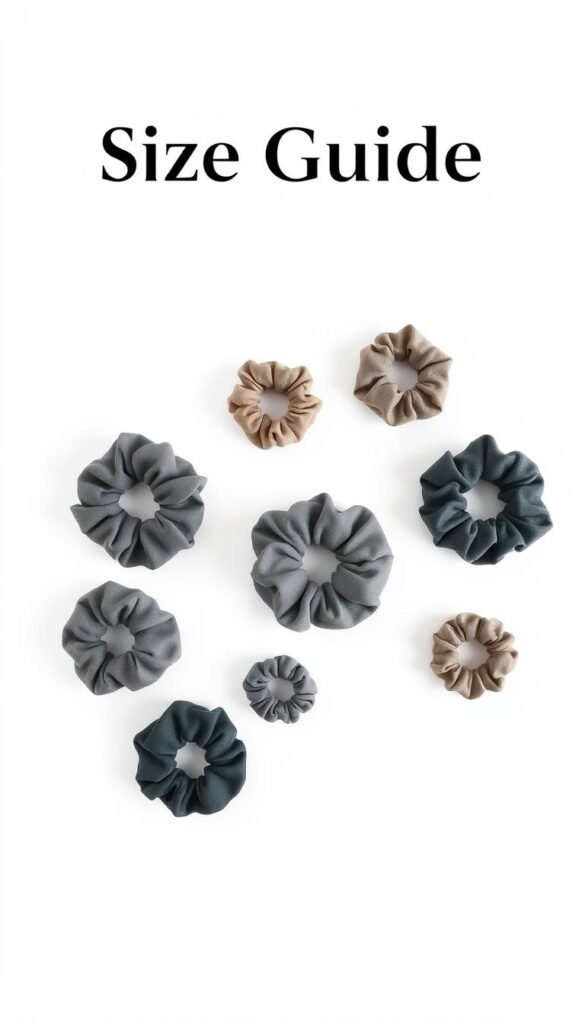
To ensure your DIY scrunchie is both functional and fashionable, it’s essential to get the measurements right. The size of your scrunchie can affect not only how it looks but also how comfortable it is to wear.
Small Scrunchies for Kids
For children, a smaller scrunchie is more suitable. Typically, a fabric piece measuring 3.5″ x 18″ with 7″ elastic is ideal. This size is perfect for kids with thinner or shorter hair.
Regular Scrunchies
For most adults, a regular-sized scrunchie made from a 4″ x 20″ fabric piece with 8″ elastic works well. This size accommodates average hair thickness and is comfortable to wear.
Large Scrunchies for Thick Hair
Those with thick or voluminous hair may require larger scrunchies. A fabric piece of 4.5″ x 22″ with 9″ elastic is recommended. The extra size and elastic ensure that the scrunchie can hold a larger amount of hair comfortably.
| Scrunchie Size | Fabric Measurements | Elastic Length |
|---|---|---|
| Small | 3.5″ x 18″ | 7″ |
| Regular | 4″ x 20″ | 8″ |
| Large | 4.5″ x 22″ | 9″ |
When choosing fabric for larger scrunchies, consider using sturdier cottons or less slippery materials to ensure they can hold heavy hair securely. Testing the scrunchie’s strength by gently tugging on it can also help determine if it’s suitable for thick hair.
Creative Scrunchie Variations to Try
Take your scrunchie game to the next level by trying out these creative variations. Once you’ve mastered the basic scrunchie, you can experiment with different styles and designs to add some flair to your hair accessories.
Scrunchies with Bows
Adding a bow to your scrunchie can give it a cute and feminine touch. Simply attach a small bow to the center of the scrunchie using a needle and thread. You can use matching or contrasting fabric for the bow to create different looks.
Two-Fabric Scrunchies
Mix and match different fabrics to create a unique and eye-catching scrunchie. Sew two different fabrics together along the edge to create a contrasting effect. This is a great way to use up leftover fabric scraps.
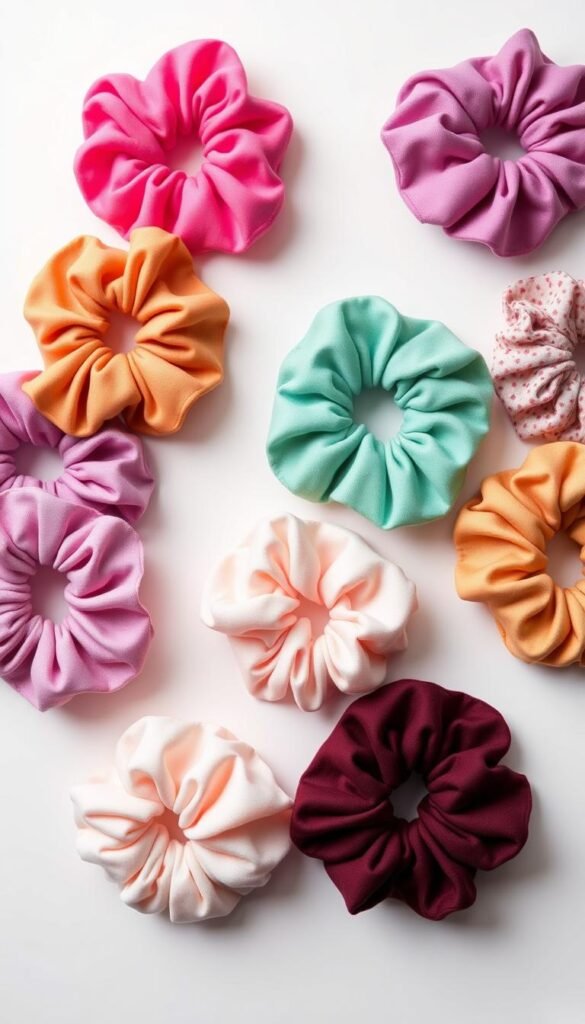
Scrunchies with Tails or Bunny Ears
Add a playful touch to your scrunchie by attaching a tail or bunny ears. You can use the same fabric as the scrunchie or contrast it with a different material.
Mini Scrunchies
Mini scrunchies are perfect for thin hair, partial updos, or braids. To make a mini scrunchie, use a smaller piece of fabric (typically 16″ x 2″). Adjust your measurements and technique accordingly to create these adorable tiny scrunchies.
| Scrunchie Type | Fabric Size | Elastic Length |
|---|---|---|
| Mini Scrunchie | 16″ x 2″ | 4-5 inches |
| Regular Scrunchie | 18″ x 3″ | 6-7 inches |
| Large Scrunchie | 20″ x 4″ | 8-9 inches |
Conclusion: Why Making Your Own Scrunchies is Worth It
The joy of crafting your own scrunchies lies not just in the finished product, but in the creative process itself. By making your own hair accessories, you’re not only saving money but also contributing to a more sustainable fashion practice.
One of the key benefits of this DIY project is its accessibility to beginners. It serves as an excellent introduction to sewing and crafting, helping build confidence in your skills. As you continue to create, you’ll find that making scrunchies allows for a high degree of customization, enabling you to match your accessories perfectly with your outfits.
Moreover, homemade scrunchies make thoughtful, personalized gifts for friends and family. The project’s versatility encourages you to experiment with different patterns and techniques, potentially leading to other exciting hair accessory projects. Using fabric scraps that might otherwise be discarded adds an environmental benefit, making this project even more rewarding.
As you refine your skills, consider exploring other creative variations, such as seasonal scrunchie designs to refresh your accessories throughout the year. We encourage you to share your creations on social media using a specific hashtag, connecting with a community of like-minded crafters.
In conclusion, making your own scrunchies is a fun, rewarding project that offers numerous benefits, from cost savings and customization to sustainability and skill-building. With practice, each scrunchie you make will be better than the last, and you’ll have a beautiful collection of handmade hair accessories to show for it.