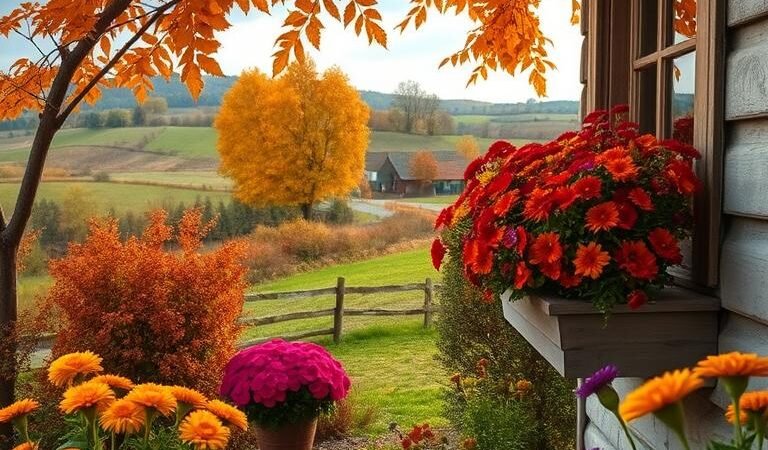
As summer fades and cooler temperatures arrive, refreshing your home’s exterior becomes a top priority. One simple yet effective way to boost your home’s curb appeal is by using fall window boxes. These versatile containers offer a perfect opportunity to showcase seasonal colors, textures, and plants that thrive in the cooler weather.
Fall window boxes create instant curb appeal with minimal effort and investment compared to larger landscaping projects. By incorporating a mix of traditional autumn elements and unexpected combinations, you can add visual interest to your home’s exterior. Whether you have a traditional or modern home, window boxes can be adapted to suit your style.
Key Takeaways
- Enhance your home’s curb appeal with seasonal window boxes
- Choose plants and designs that thrive in cooler weather
- Adapt window box ideas to suit your home’s style
- Experiment with traditional and unexpected elements
- Consider sustainable decorating options with transplantable plants
Creating Stunning Fall Window Boxes: The Basics
To create a stunning fall window box, it’s essential to understand the basics of designing a visually appealing arrangement. A well-designed window box can add curb appeal to your home and create a beautiful display.
Understanding the Thriller, Filler, Spiller Approach
The thriller, filler, spiller approach is a fundamental principle in creating visually balanced window boxes. This approach involves selecting thriller plants that add height and drama, filler plants that pack the container with color, and spiller plants that cascade over the edge.
Choosing the Right Container and Soil
When selecting a container, ensure it has proper drainage holes and is proportionate to your window size. The right soil mixture is also crucial; use a high-quality potting soil that retains moisture but drains well.
Colorful Plant Options for Fall Window Boxes
As the seasons change, your window boxes can be transformed with colorful fall plants. The right choices can add vibrant color and texture, making your home’s exterior stand out.
Flowering Kale and Ornamental Cabbage
Flowering kale and ornamental cabbage are staples for fall window boxes, offering stunning texture and color variation. These cold-hardy plants can survive light frosts, making them perfect for extending your display into late fall. They come in shades of purple, pink, white, and green, creating visual interest with their ruffled, textured leaves.
Vibrant Chrysanthemums (Mums)
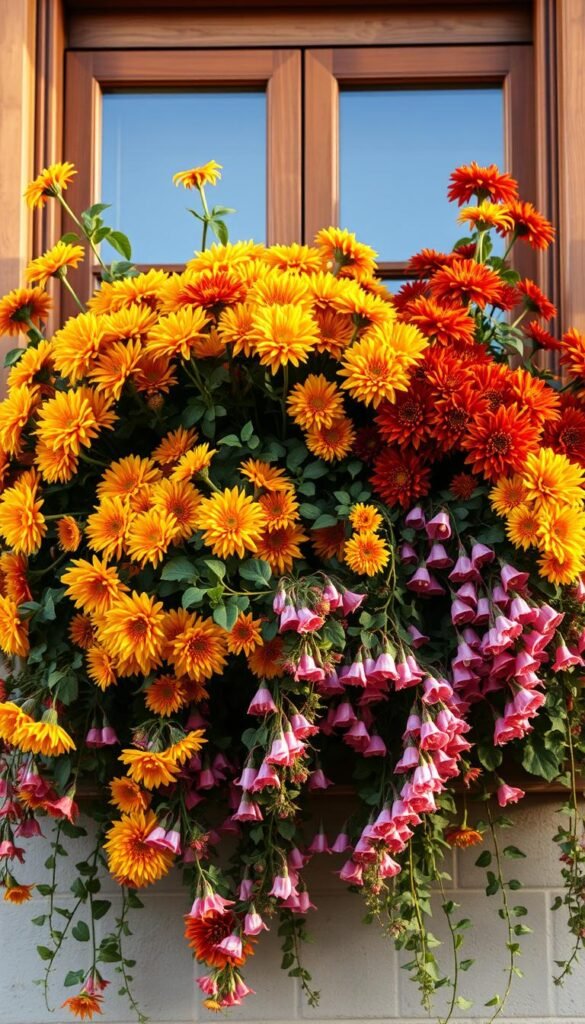
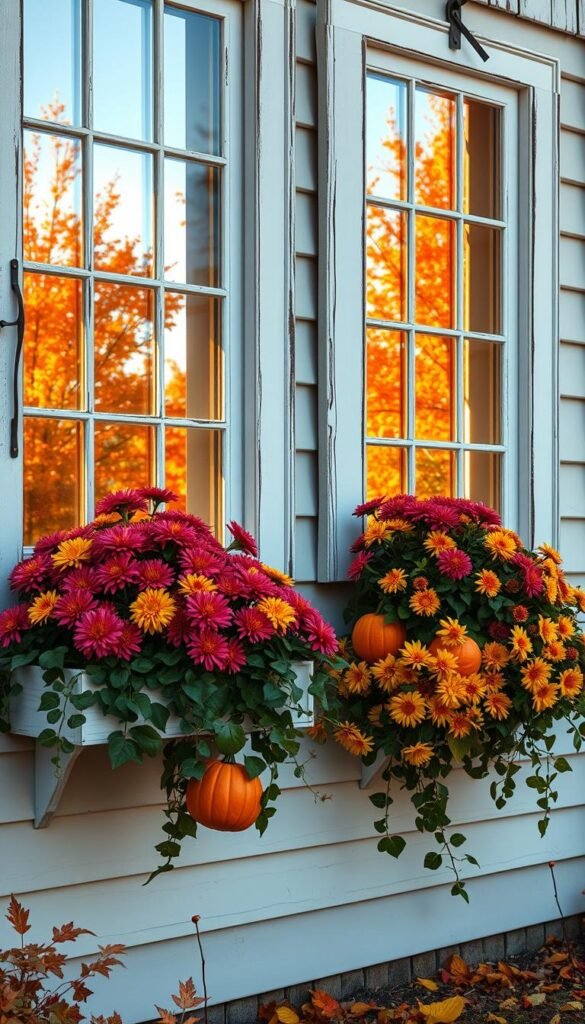
Chrysanthemums, or mums, provide vibrant pops of color in fall window boxes with their full, rounded blooms in autumn hues. You can keep them in their nursery pots for easy arrangement and replacement as blooms fade.
Ornamental Peppers for Visual Interest
Ornamental peppers add unexpected visual interest with their colorful fruits in shades of red, orange, purple, and yellow. These peppers create a striking contrast against other fall foliage and maintain their color throughout the season.
Cold-Hardy Violas and Pansies
Cold-hardy violas and pansies offer cheerful “faces” and come in a wide range of fall colors. They can withstand temperature dips into the 20s and continue blooming well into the fall season.
Heuchera (Coral Bells) for Foliage Color
Heuchera provides exceptional foliage color in shades of burgundy, caramel, purple, and amber, complementing other fall plants. Its varied leaf colors and interesting textures make it an excellent filler plant.
Unique Combinations for Eye-Catching Fall Window Boxes
Fall window boxes offer a fantastic opportunity to showcase your creativity with unique plant combinations. By mixing and matching different plants, you can create a visually appealing display that reflects your personal style and complements your home’s exterior.
Edible and Ornamental: Swiss Chard and Herbs
Combining edible plants like Swiss chard with herbs such as sage and thyme creates a beautiful and functional fall window box. The colorful stems of Swiss chard, especially rainbow varieties, add visual interest, while herbs provide fragrance and texture. Many herbs thrive in partial shade, making them ideal for window boxes that don’t receive full sun.
Tropical Flair: Coleus and Crotons
For a tropical-inspired look, consider combining coleus and crotons in your fall window box. Coleus leaves come in a variety of colors, including lime, burgundy, and purple, creating a vibrant display. Crotons add exotic flair with their glossy, multicolored leaves that intensify in color as temperatures cool in the fall months.
Desert-Inspired: Succulents for Dry Climates
If you live in a dry climate, succulents are an excellent choice for your fall window box. They come in a range of colors and textures, from copper to burgundy and green, creating a sophisticated desert-inspired display. Succulents are drought-tolerant and require minimal maintenance, making them perfect for busy gardeners.
Design Tips for Seasonal Window Box Displays
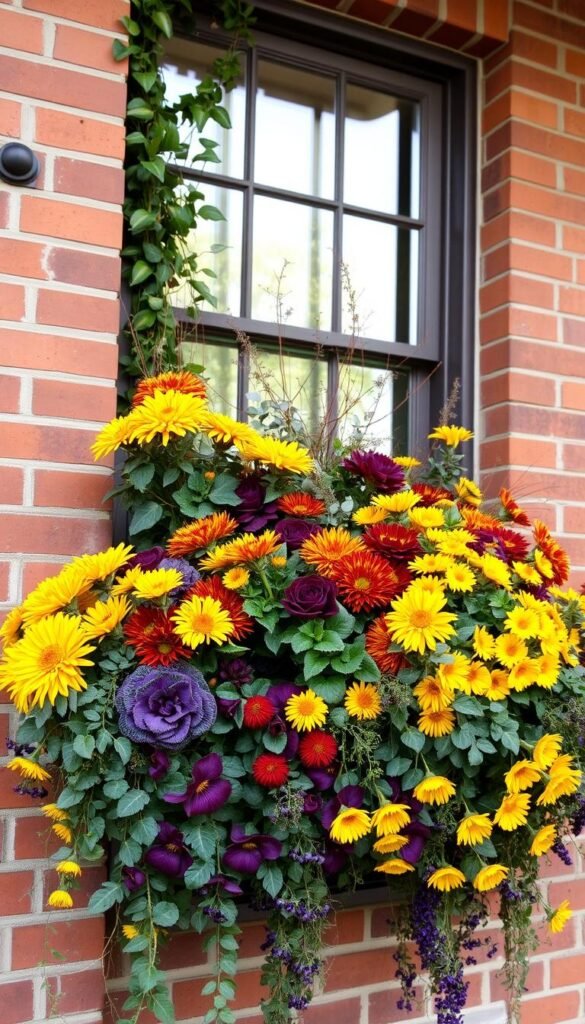
To elevate your fall window box displays, consider incorporating decorative elements that add charm and visual interest. This can be achieved by combining the right plants with seasonal accents.
Incorporating Mini Pumpkins and Gourds
Adding mini pumpkins and gourds to your planters can create instant fall charm. These seasonal accents come in various colors and shapes, allowing you to complement your plant color scheme or create interesting contrasts.
Adding Dried Elements: Hydrangeas and Grasses
For covered porches or protected window areas, dried elements like hydrangea blooms add sophisticated texture and volume to fall planters. Dried grasses such as pampas grass or wheat stalks can serve as thrillers in your arrangement, reinforcing the harvest theme.
Creating Color Themes with Fall Foliage
When designing color themes, consider creating monochromatic displays or complementary color schemes. Fall foliage plants like heuchera can inspire your color palette, and coordinating your window box colors with your home‘s exterior enhances curb appeal.
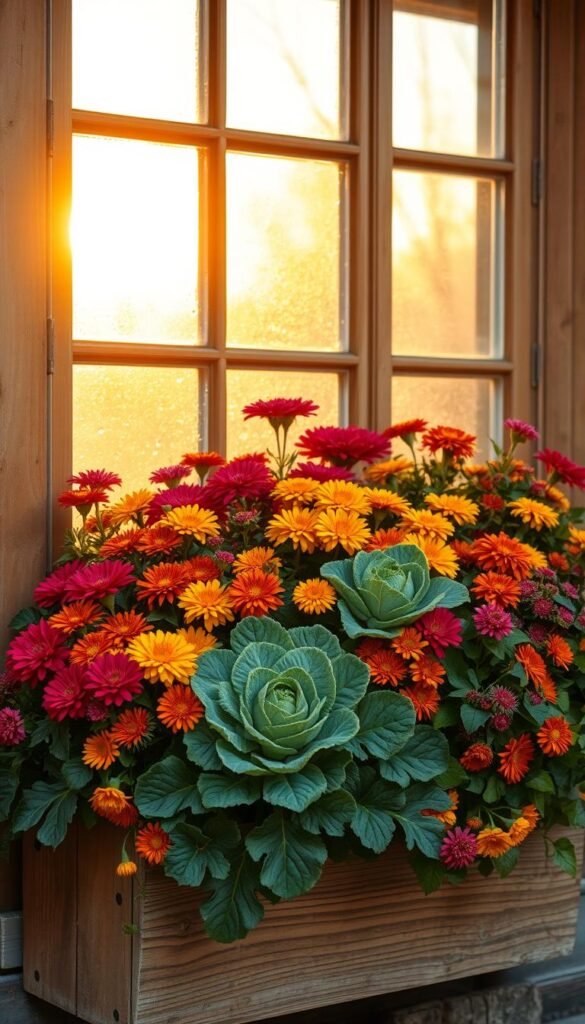
By incorporating these design tips, you can create beautiful fall window displays that enhance your home‘s exterior and provide a welcoming ambiance on your porch.
Maintaining Your Fall Window Boxes
To keep your fall window boxes thriving, it’s essential to adapt your care routine to the cooler weather. This involves adjusting your watering and feeding strategies to meet the changing needs of your plants.
Watering and Feeding Tips for Cooler Weather
As temperatures cool, the watering needs of your fall window boxes decrease, but it’s still crucial to check the soil moisture regularly. Water your plants at the soil level to prevent moisture from reaching the blooms, which can cause them to become mushy. For mums and other flowering plants, morning watering is ideal, allowing the plants to dry before evening. Switch to a low-nitrogen, higher-phosphorus fertilizer to encourage blooming rather than leafy growth.
- Water plants at soil level
- Use low-nitrogen fertilizer
Extending the Life of Your Fall Display
To extend the life of your fall display, monitor weather forecasts and protect sensitive plants during unexpected frost events. Covering your window boxes with lightweight fabric or bringing them inside can help them survive early frost warnings. Regularly deadhead spent blooms to encourage continued flowering and maintain a tidy appearance. Insulate cold-sensitive plants with mulch or straw to protect roots and potentially get a second flush of blooms.
- Monitor weather forecasts
- Protect plants from frost
Conclusion
The beauty of fall window boxes lies in their ability to be customized to your style. With the 15 ideas presented, you can mix and match plants and designs to create unique displays that complement your home’s architecture. Many plants used in fall window boxes can be transplanted to your garden at the end of the season, providing year-round enjoyment. By embracing fall window box displays, you can enhance your home and house throughout the year, connecting with nature’s rhythms and potentially increasing your home’s value.