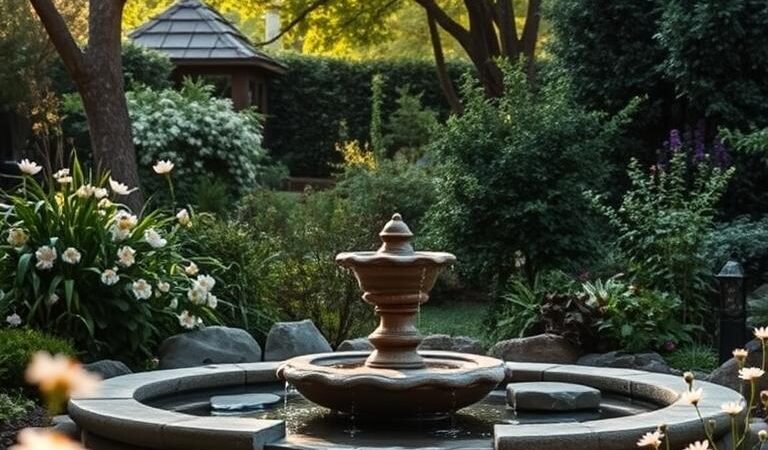
Transform your backyard into a tranquil oasis with the soothing sound of flowing water. A fountain can elevate your outdoor space, creating a serene atmosphere perfect for relaxation.
Our collection of 17 DIY Garden Fountains offers a range of ideas to suit various skill levels and budgets. From simple to more complex projects, you can create a beautiful fountain that complements your backyard aesthetic.
Key Takeaways
- Create a peaceful outdoor sanctuary with a DIY fountain
- Transform your backyard into a tranquil retreat
- Enjoy the therapeutic benefits of flowing water
- Choose from 17 unique fountain ideas
- Customize your fountain to match your garden’s style
- Save money with budget-friendly DIY options
Understanding Garden Fountains and Their Benefits
Incorporating a fountain into your garden design can significantly enhance its ambiance. A garden fountain is more than just a decorative element; it’s a key to creating a serene and inviting outdoor space. The combination of visual appeal and soothing sounds can transform your backyard into a peaceful retreat.
A fountain is composed of three main elements: water, a pump, and a sculpture. The water flows up a pipe and trickles back down, creating a continuous cycle. The pump propels the water, while the sculpture provides a visually appealing element over which the water flows.
Creating a Peaceful Atmosphere
The sound of flowing water from a fountain creates white noise that masks unwanted sounds, promoting relaxation. Fountains can become focal points in garden design, drawing the eye and creating visual interest. This can lead to a more peaceful atmosphere, perfect for unwinding.
Health and Environmental Benefits
Water features like fountains offer numerous health and environmental benefits. They can reduce stress, improve mood, and even increase humidity in dry climates, benefiting both plants and people. Additionally, fountains attract beneficial wildlife and can improve air quality by generating negative ions.
| Benefit | Description |
|---|---|
| Stress Reduction | The soothing sound of water helps reduce stress and anxiety. |
| Improved Air Quality | Fountains generate negative ions, improving air quality. |
| Attracting Wildlife | Water features attract birds, butterflies, and other beneficial wildlife. |
Basic Components of DIY Garden Fountains
Creating a serene backyard oasis begins with understanding the fundamental components of DIY garden fountains. A well-designed fountain is more than just a decorative piece; it’s a harmonious blend of several crucial parts working together to create a soothing atmosphere.
Essential Parts: Pumps, Basins, and Water Flow
The submersible pump is the heart of the system, circulating and fine-filtering the water. A properly sized basin or reservoir is essential to keep the pump submerged. The pump is typically electric, requiring an exterior outlet within 50 feet.
- The submersible pump circulates water through the fountain system.
- A properly sized basin or reservoir holds enough water to keep the pump submerged.
Tools and Materials You’ll Need
To construct a DIY garden fountain, you’ll need various tools and materials, including drills, pipe cutters, and wrenches. Common materials used include waterproof containers, stones, and sealants. 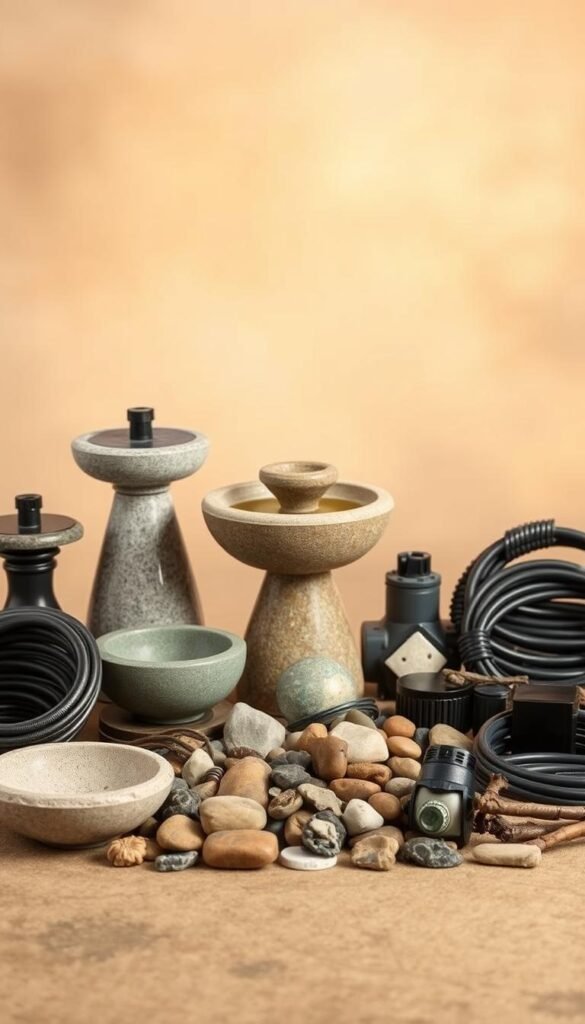
- Essential tools include drills, pipe cutters, and wrenches.
- Common materials used are waterproof containers, stones, and sealants.
Planning Your DIY Fountain Project
Before you start building your DIY fountain, it’s essential to plan it thoroughly. A well-planned project ensures that your fountain complements your yard and meets your needs.
Choosing the Perfect Location
Select a spot that’s visible from your favorite outdoor seating area and easily accessible for maintenance. Ensure the location is near an outdoor electrical outlet, as most pump cords don’t exceed 50 feet. Consider the surrounding landscape and how the fountain will integrate with existing features on your patio or in your garden.
Determining the Right Size and Style
When determining the size and style of your fountain, consider the overall scale of your outdoor space. Choose a style that complements your yard‘s theme, whether it’s modern, rustic, classical, or Asian-inspired. Think about viewing angles from different parts of your yard and from inside your home. A table can help you decide:
| Fountain Style | Garden Theme | Viewing Angle |
|---|---|---|
| Modern | Minimalist | Direct view |
| Rustic | Country | Angled view |
| Asian-inspired | Zen | Multiple views |
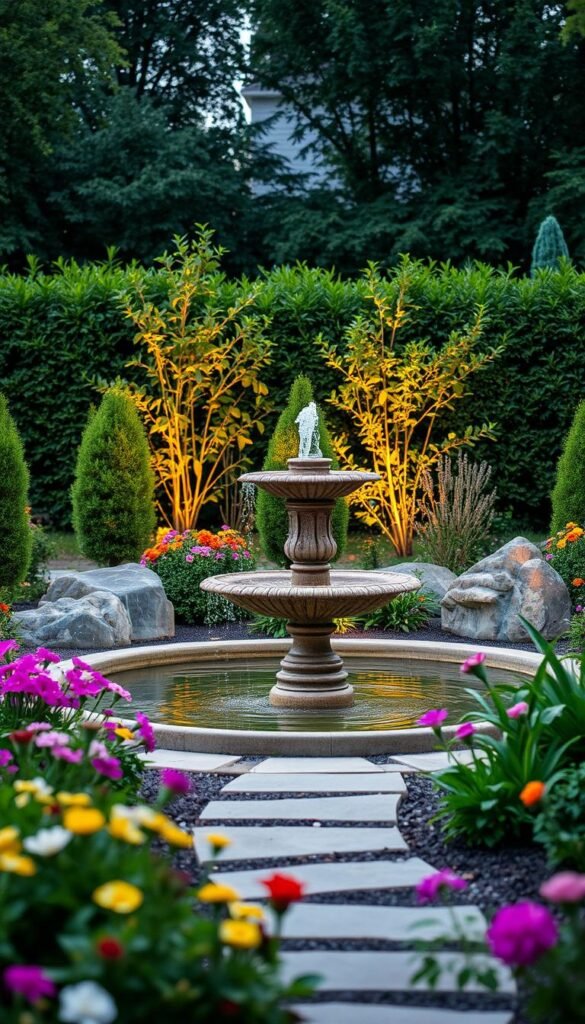
Simple Container Fountain Ideas
Transforming everyday containers into fountains can add a unique touch to your outdoor space. This creative approach not only recycles old items but also brings the soothing sound of water into your garden.
Watering Can Fountains
Turn old watering cans into charming fountain features by arranging them in a cascading pattern. Simply drill a hole in the bottom of each can, attach a tube, and connect it to a pump. This creates a beautiful, multi-tiered water fountain.
Galvanized Bucket and Tub Designs
Use galvanized buckets or tubs as both water reservoirs and decorative elements. Fill the container with water, add a submersible pump, and arrange stones or pebbles around it to create a natural look. This design works well in a country garden setting.
Flower Pot Tiered Fountains
Create a tiered fountain by stacking graduated sizes of flower pots on top of each other. Ensure each pot is sealed to make it waterproof, then connect them with tubing and a pump to achieve a cascading water effect.
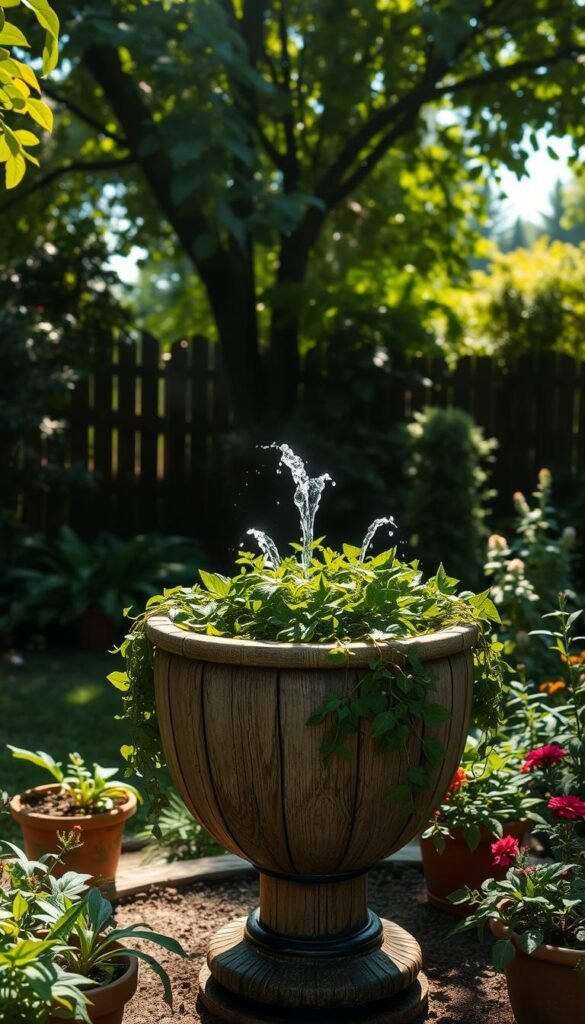
To enhance your container fountain, consider incorporating plants around it to create a lush, integrated look. You can also experiment with different container positions and angles to achieve the most pleasing water flow patterns. Don’t forget to disguise pumps and tubing within the design for a more natural appearance.
Natural Stone Fountain Projects
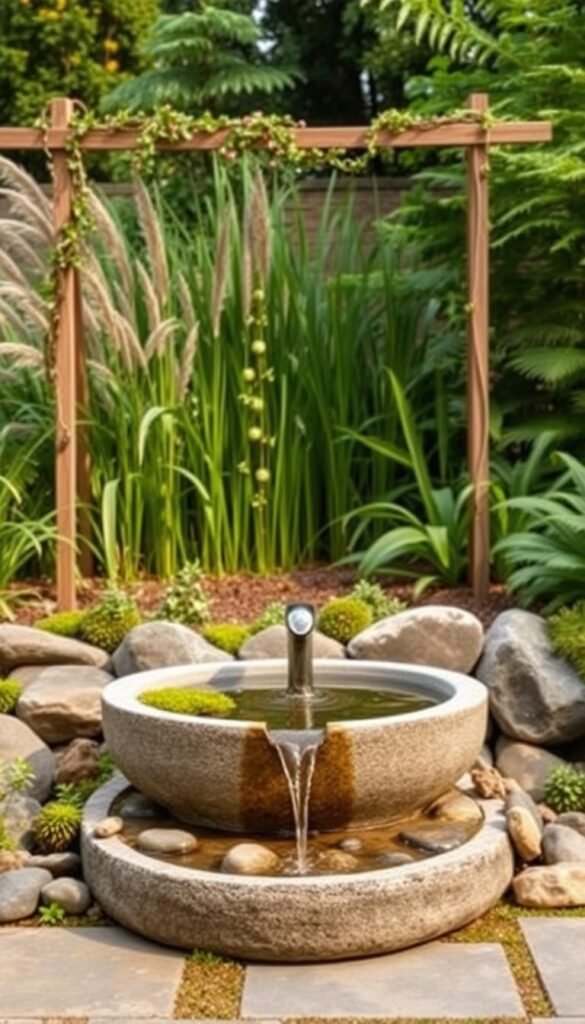
Incorporating natural stone into your fountain design adds a unique, organic beauty to your garden. Natural stone fountains can become a stunning focal point, blending seamlessly with the surrounding landscape.
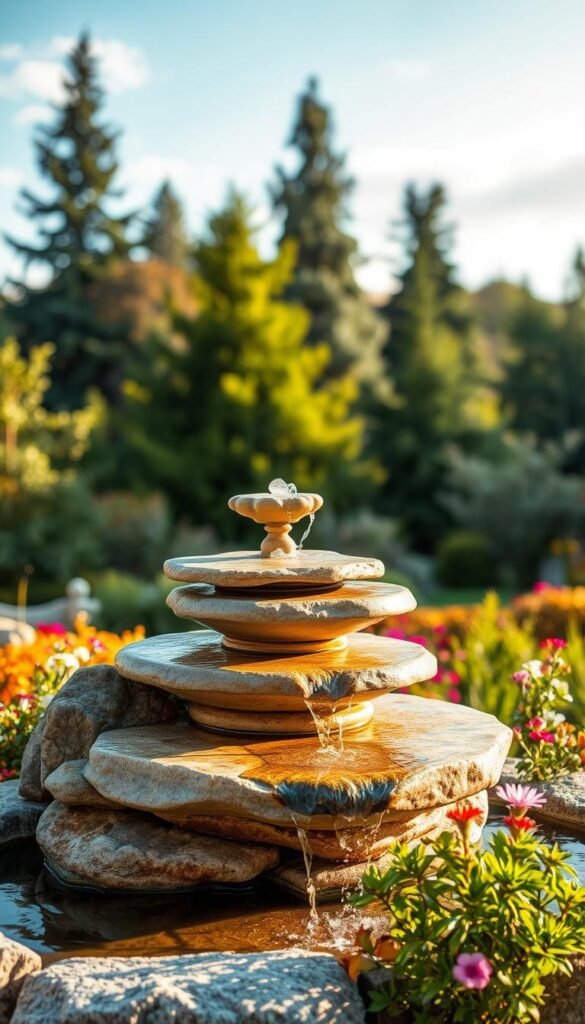
Stacked Rock Water Features
Stacked rock water features create a visually appealing arrangement that can be customized to fit any garden style. To achieve this, start by stacking the stones in an aesthetically pleasing order. Number the underside of each stone in pencil to keep track of the order as you unstack them. When drilling, lay a stone on soft ground or gravel and use a hammer drill fitted with a 5⁄8-inch masonry bit to drill through the flat side of the stone.
To create a natural-looking water flow, consider the texture and porosity of the rocks. The goal is to have water flow naturally over and around the stacked stones, creating a soothing fountain effect.
Drilled Stone Fountains
A drilled stone fountain involves creating a hole through a single large stone or boulder, allowing water to bubble up from the center. This technique requires careful planning and execution, including selecting the right drill and maintaining the stone’s integrity.
To enhance the natural look of your stone water feature, consider complementary plantings around the fountain. Maintenance is also crucial; regular cleaning can prevent mineral buildup and algae growth, ensuring your fountain remains a serene and beautiful addition to your garden.
Repurposed Item Fountain Ideas
Repurposing vintage items can lead to some truly unique water fountain ideas. This creative approach not only adds character to your garden but also tells a story through the items you choose.
Vintage Pump Fountains
Antique hand pumps can be repurposed as decorative fountain features, creating a nostalgic ambiance. By making water appear to pump from the spout, you can create a captivating visual effect.
Teapot and Watering Can Cascades
Cascading fountain effects can be achieved using collections of teapots, watering cans, or other vintage containers. This creates a charming, whimsical atmosphere in your garden, perfect for a serene retreat.
Upcycled Barrel Fountains
Converting wooden barrels or metal drums into attractive water features is ideal for rustic garden settings. With proper pump installation, these can become a beautiful piece of garden art.
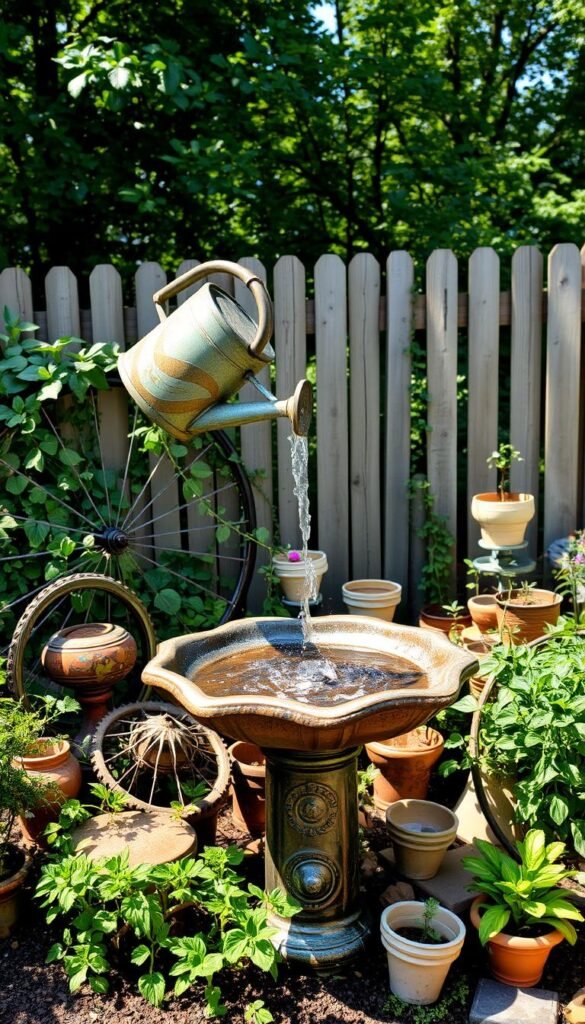
By incorporating repurposed items into your fountain design, you can create a unique conversation piece that reflects your personal style and creativity.
Step-by-Step: Building a Basic Stone Fountain
With the right steps, you can build a beautiful stone fountain. This guide will walk you through the process of creating a serene ambiance in your garden.
Digging and Preparing the Basin
Start by digging a pit that is 2 inches deeper than the basin and wide enough to fit it. Use a pointed shovel and place the soil in a wheelbarrow or on a tarp to protect nearby turf. Then, dig a narrow, shallow trench between the pit and the nearest exterior outlet. Lay a 2-inch-thick bed of drainage gravel in the pit to prevent settling and water accumulation. Finally, place the basin atop the gravel, adjusting as necessary to ensure it doesn’t rock.
Installing the Pump and Piping
Next, install a submersible pump in the basin and connect it to an electrical source. Measure, cut, and connect copper piping to create the water delivery system. Test the pump and adjust the water flow before completing the fountain structure. Ensure all electrical components are safely managed near water.
Assembling the Fountain Structure
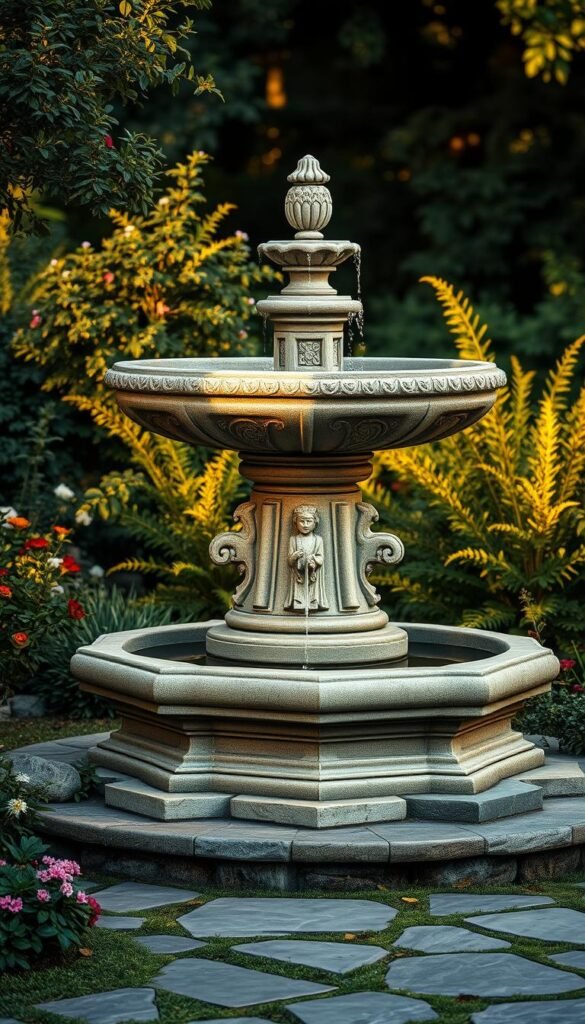
Carefully stack and secure stones around the central pipe. Adjust stone placement to create the most pleasing water flow patterns. Take your time to achieve the desired aesthetic and functional result.
| Step | Description |
|---|---|
| 1 | Dig a pit for the basin |
| 2 | Prepare the pit with drainage gravel |
| 3 | Install the submersible pump and piping |
| 4 | Assemble the fountain structure with stones |
Bamboo and Asian-Inspired Fountains
Bamboo fountains offer a serene way to bring Asian-inspired tranquility to your garden. A bamboo fountain can add a little bit of zen to your backyard or porch, and you can install a pretty feature yourself with an easy-to-assemble kit.
Creating Bamboo Spout Features
To create traditional Japanese-style bamboo spout fountains, known as shishi-odoshi, you’ll need to assemble a structure that fills with water and tips over when full. This is achieved by using hollow bamboo segments and a carefully balanced design. Properly sealing and preparing the bamboo for outdoor use is crucial to ensure durability.
Zen Garden Water Elements
In Zen garden design, water features play a significant role in creating a meditative atmosphere. To incorporate Zen principles into your fountain design, consider using smooth stones, gravel, and minimalist plantings around your Asian-inspired fountain. Complementary elements like stone lanterns or Buddha statues can enhance the theme.
When designing your bamboo fountain, consider the gentle, subtle water sounds preferred in Japanese garden design. The symbolic meaning of water elements in traditional Asian garden philosophy is also worth exploring, as it adds depth to your garden’s ambiance.
| Feature | Description | Benefit |
|---|---|---|
| Bamboo Spout | Traditional Japanese-style fountain | Creates soothing sounds |
| Smooth Stones | Used around the fountain | Adds to the serene ambiance |
| Stone Lanterns | Complementary decorative element | Enhances the Asian theme |
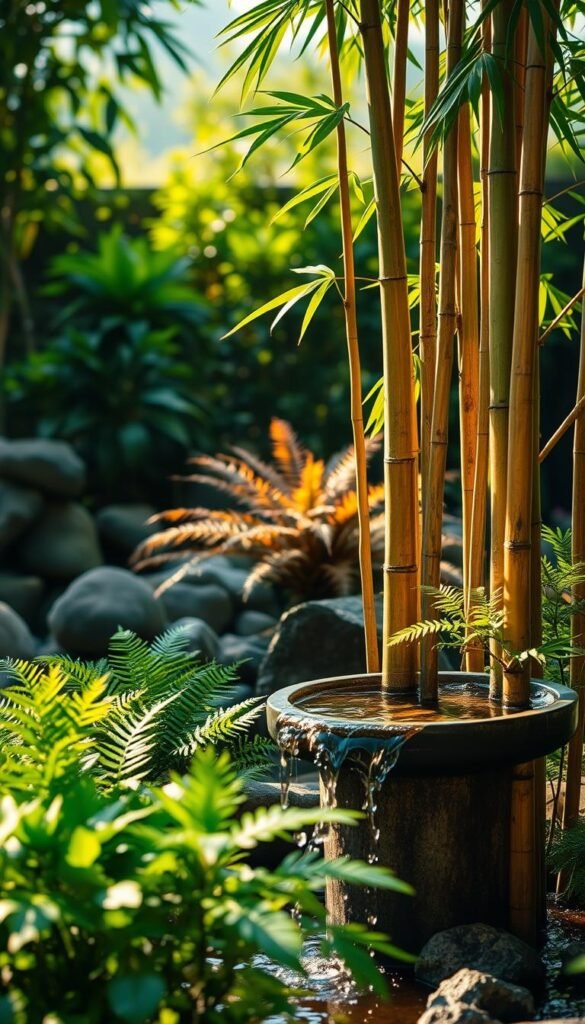
By incorporating these elements and principles, you can create a beautiful and peaceful bamboo fountain that brings a touch of zen to your outdoor space.
Wall and Vertical Fountain Designs
Transform your outdoor space with a stunning wall or vertical fountain design. These unique water features can serve as garden dividers or focal points, adding visual interest and tranquility to your backyard.
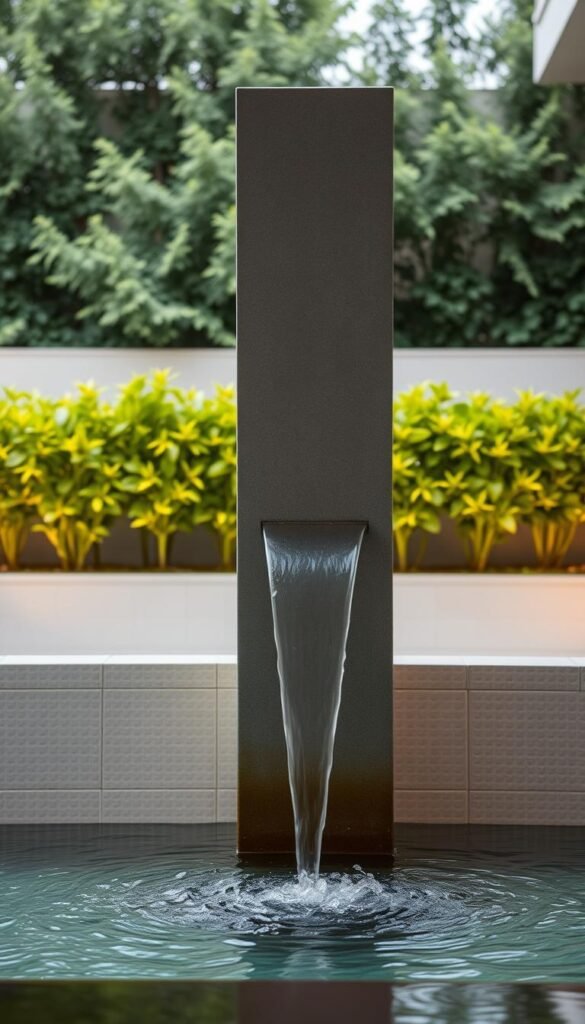
Vertical fountains are particularly beneficial for small or narrow gardens, as they maximize impact without occupying valuable floor space. One innovative idea is to create a glass table water wall, where water flows down a transparent surface, creating a mesmerizing display.
Glass Table Water Walls
To create a glass table water wall, you can repurpose an old table top. As suggested by Central Texas Gardener, turn a recycled table top into a beautiful water wall centerpiece for your backyard retreat. Ensure even water distribution across the glass surface for a smooth, continuous flow.
Cascading Planter Fountains
Another creative option is the cascading planter fountain, where water moves from one container to another, creating a soothing cascade. This design not only adds visual appeal but also helps to manage splash and spray effectively.
When installing a wall or vertical fountain, it’s crucial to properly seal and waterproof the structure to prevent leaks. Incorporating lighting into your vertical water feature can also create dramatic effects, especially at night. By choosing the right design and implementing it correctly, you can enjoy a serene and beautiful outdoor space.
Solar-Powered Fountain Options
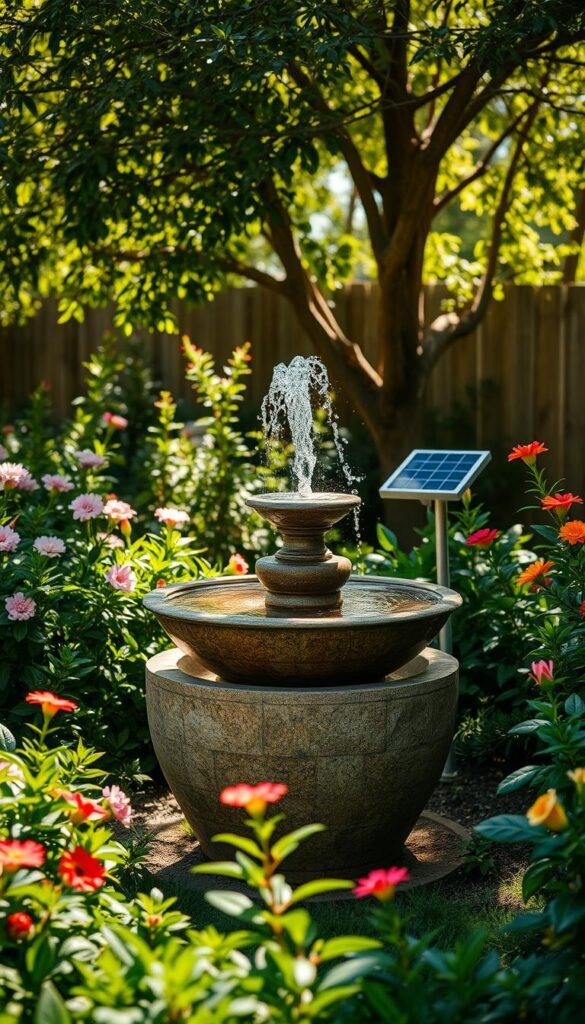
Harnessing the sun’s energy, solar fountains offer a sustainable solution for garden water features. This eco-friendly alternative to traditional electric fountains is not only cost-effective but also reduces our carbon footprint.
Benefits of Solar Fountains
Solar-powered fountain pumps work by converting sunlight into energy, eliminating the need for electricity. This results in significant cost savings and reduced environmental impact. When selecting a solar pump system, consider the size of your fountain and the volume of water it holds to ensure optimal performance.
Simple Solar Conversion Tips
To convert an existing electric fountain pump to solar power, use an adapter kit. Position the solar panel in a location that receives maximum sunlight for optimal efficiency. For areas with limited sunlight, consider a battery backup system to maintain consistent water flow.
Some key considerations for solar fountains include proper maintenance, such as cleaning the solar panel regularly, and addressing potential limitations, such as cloudy days or shaded locations.
Miniature and Tabletop Fountains
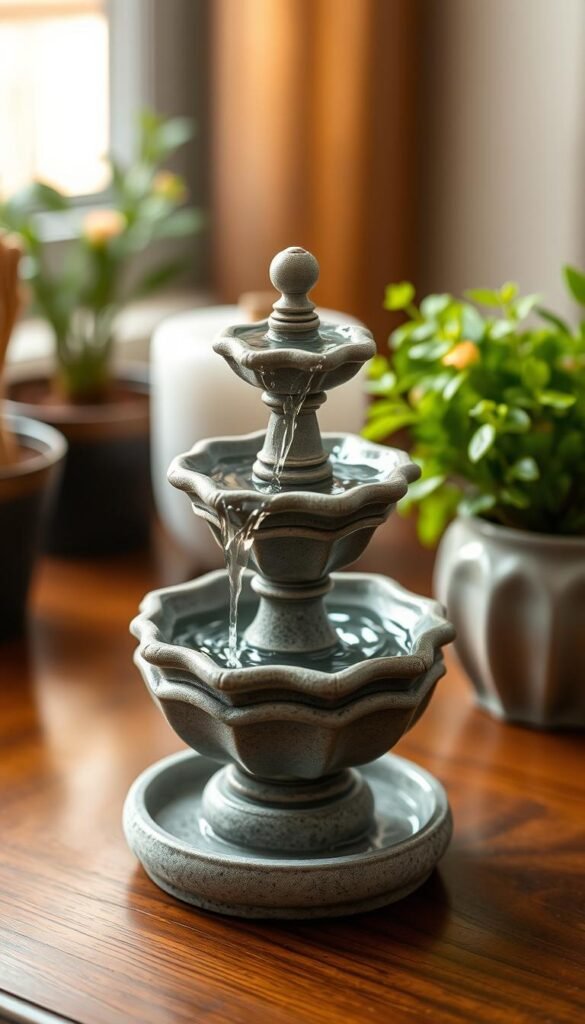
Miniature fountains bring serenity to even the smallest of spaces. These tiny water features are perfect for indoor or outdoor decor, creating a soothing ambiance with the gentle sound of water.
Tiny Egg and Globe Fountains
Using decorative items like stone eggs or glass globes, you can create charming miniature fountains. These unique pieces can be the centerpiece of your home decor, adding a touch of elegance. As one designer notes, “The sound of water is calming and can transform any room.”
Small Space Solutions
For small spaces, tabletop fountains are ideal. They require a small water pump and can be placed on patios, balconies, or indoors. When choosing a container, consider the style of your home to ensure it complements your decor. Managing water evaporation is crucial in these small-scale water features.
As
“The gentle sound of water can create a peaceful atmosphere, even in the most compact of living spaces.”
This makes miniature fountains a perfect addition to anysmallarea, enhancing the ambiance with the sound ofwaterand the visual appeal of afountain.
Rustic and Country-Style Water Features
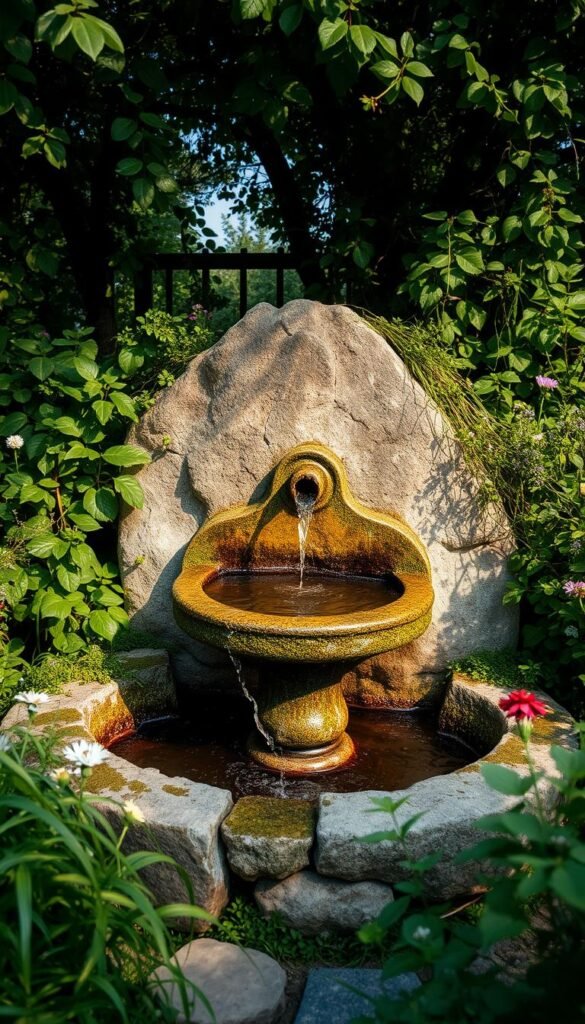
Creating a peaceful backyard oasis can be achieved with rustic and country-style fountains. These charming water features bring a sense of nostalgia and natural beauty to your yard. By incorporating elements like weathered wood, metal accents, and natural stone, you can create a unique fountain that becomes the centerpiece of your garden.
Wishing Well Designs
A wishing well fountain is a delightful addition to any country-style garden. To create this look, build a small brick well around your water source, then erect a weathered wood frame around it. Hang an old-fashioned bucket from a rope so that it just grazes the top of the water. This design creates a soothing, nostalgic focal point in your yard.
Campfire Tripod Fountains
For a more rustic look, consider building a campfire-inspired tripod fountain. Use metal poles to create a tripod structure, and suspend a container from the center. This unique design adds a touch of adventure to your garden, creating a beautiful piece that draws the eye.
| Rustic Element | Description | Effect |
|---|---|---|
| Weathered Wood | Used in framing and accents | Adds age and character |
| Metal Accents | Used in tripod structures and decorative elements | Provides industrial charm |
| Natural Stone | Used in basin construction and surrounding decor | Brings natural beauty and texture |
Maintaining Your DIY Garden Fountains
To keep your DIY garden fountain in optimal condition, regular maintenance is crucial. This involves checking the water level frequently, especially during hot weather, to ensure the pump remains submerged.
Regular Cleaning Procedures
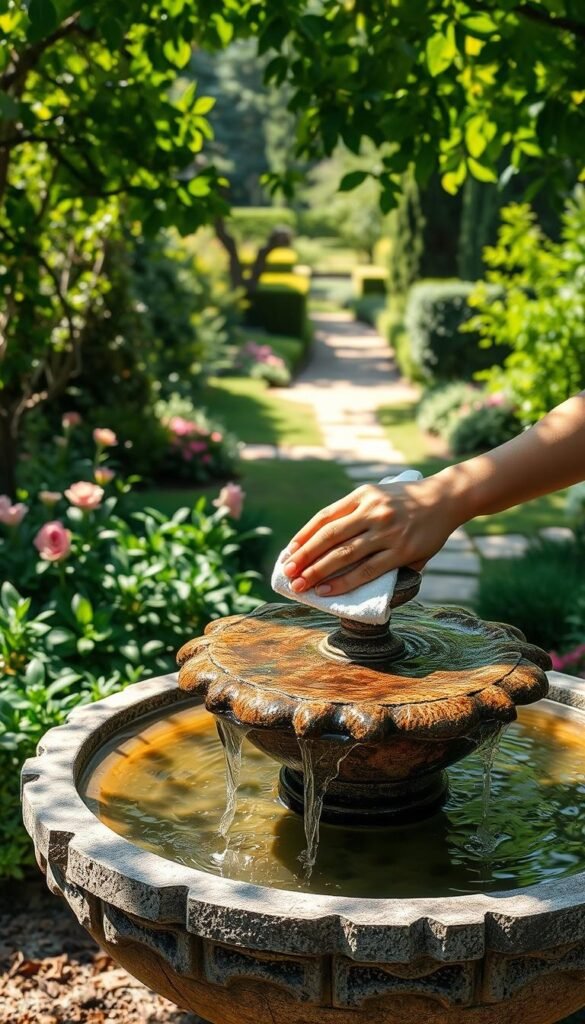
Cleaning your fountain regularly is vital. Remove debris from the surface and clean the pump filters to maintain optimal water flow. Use a gentle scrubber to remove algae from the fountain’s surfaces.
Seasonal Care and Winterizing
In colder climates, winterizing your fountain is essential. Drain the fountain and pump, clean them, and store the pump indoors. Cover or bring portable fountains inside to prevent freeze damage. This way, you’ll check your fountain’s condition and protect it from harsh weather.
Troubleshooting Common Fountain Problems
Common fountain problems can be resolved with the right troubleshooting techniques. Issues such as leaks, pump failures, and water loss can be addressed effectively with a systematic approach.
Addressing Leaks and Water Loss
To identify leaks, check the basin and fountain structure for cracks. Ensure all pipe connections are tight and sealed. Look for signs of splashing or overspray that might be causing water loss. Apply waterproof sealant to any identified leaks to prevent further loss.
| Issue | Solution |
|---|---|
| Cracks in basin or fountain | Apply waterproof sealant |
| Loose pipe connections | Tighten and seal connections |
| Splashing or overspray | Adjust fountain design or add a splash guard |
Fixing Pump Issues
If the water pump is not functioning correctly, start by cleaning the pump intake. Check for kinks or blockages in the hose and ensure the pump is fully submerged in water. If issues persist, consider replacing the pump.
- Clean the pump intake regularly
- Check for kinks or blockages in the tubing
- Ensure the pump is fully submerged
- Replace the pump if necessary

Budget Considerations for DIY Fountains
When planning a DIY fountain project, budget considerations play a crucial role. The cost of building a DIY fountain can range from $50 to $1,000, depending on the size and complexity of the design.
Cost-Saving Tips and Material Alternatives
To save on costs, consider repurposing items like old pottery or birdbaths as your fountain base. Opting for a simple, small-scale design can also minimize material costs. Choose low-cost materials such as concrete or plastic for the fountain structure.
| Fountain Type | Estimated Cost | Materials Needed |
|---|---|---|
| Simple Container Fountain | $50-$200 | Container, pump, tubing |
| Natural Stone Fountain | $200-$500 | Stone, pump, basin |
| Repurposed Item Fountain | $100-$300 | Repurposed item, pump, tubing |
Investment vs. Long-Term Enjoyment
While initial costs are important, consider the long-term value of your DIY fountain. Investing in durable, weather-resistant materials and a quality pump can provide years of enjoyment and increase your home‘s value.
For example, a well-maintained water feature can attract wildlife and create a soothing atmosphere, enhancing your outdoor living space.
Conclusion: Creating Your Perfect Backyard Oasis
Create a serene backyard oasis with a DIY fountain. This simple project brings water‘s soothing sound home, enhancing your garden. Start simple, get creative, and enjoy your tranquil retreat.