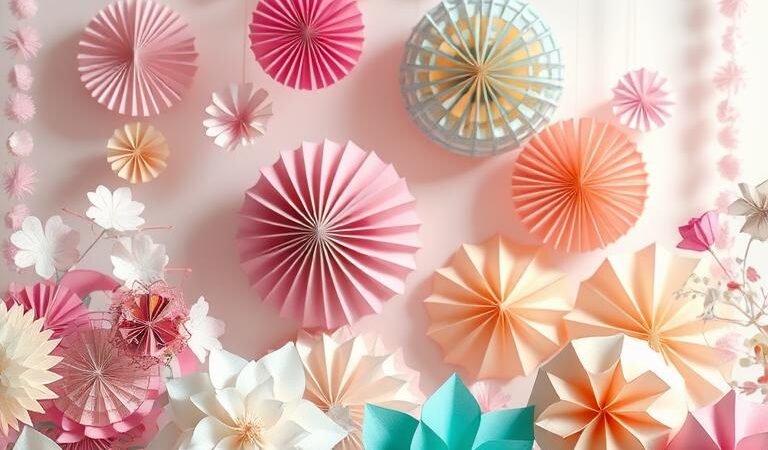
Turning your living space into a cozy haven is easy with creative DIY projects. One of the best ways to add a personal touch is with decorative paper crafts. They let you express your creativity and make unique pieces that show off your personality.
DIY room decor is getting more popular, and paper crafts are leading the way. You can make everything from detailed designs to bright patterns. This article will show you 15 creative paper craft decoration ideas to help you make your room special.
Key Takeaways
- Discover budget-friendly ways to decorate your room with paper crafts.
- Explore 15 creative DIY projects to inspire your creativity.
- Learn how to create unique pieces that reflect your personality.
- Get tips on how to incorporate decorative paper crafts into your room decor.
- Find inspiration for your next DIY project.
Transforming Your Space with Paper Craft Magic
DIY paper crafts are a great way to make your home unique. They let you add a personal touch to your decor. This way, your space can show off your personality and style.
Why Paper Crafts Are Perfect for Room Decoration
Paper crafts are great for decorating rooms because they’re versatile and eco-friendly. They can be used to create many different designs and patterns. This makes them perfect for adding a personal touch to any room. Plus, you can easily change them to fit your taste.
Some benefits of using paper crafts for room decoration include:
- Customization: Paper crafts can be tailored to fit any theme or color scheme.
- Eco-friendliness: Made from paper, these crafts are a sustainable option for home decor.
- Creativity: Paper crafting allows for a wide range of creative expressions.
Essential Tools and Materials for Paper Crafting
To start paper crafting, you need the right tools and materials. Here’s what you’ll need:
Basic Supplies Every Paper Crafter Needs
You’ll need paper, scissors, glue, and a cutting mat to begin. These tools help you make many different paper crafts. Good quality supplies make your crafting fun and your results look professional.
Optional Tools for Advanced Projects
For more complex projects, you might want tools like a paper trimmer or scoring tool. These help you make detailed designs and precise cuts. Some crafters also use software or apps to plan their projects.
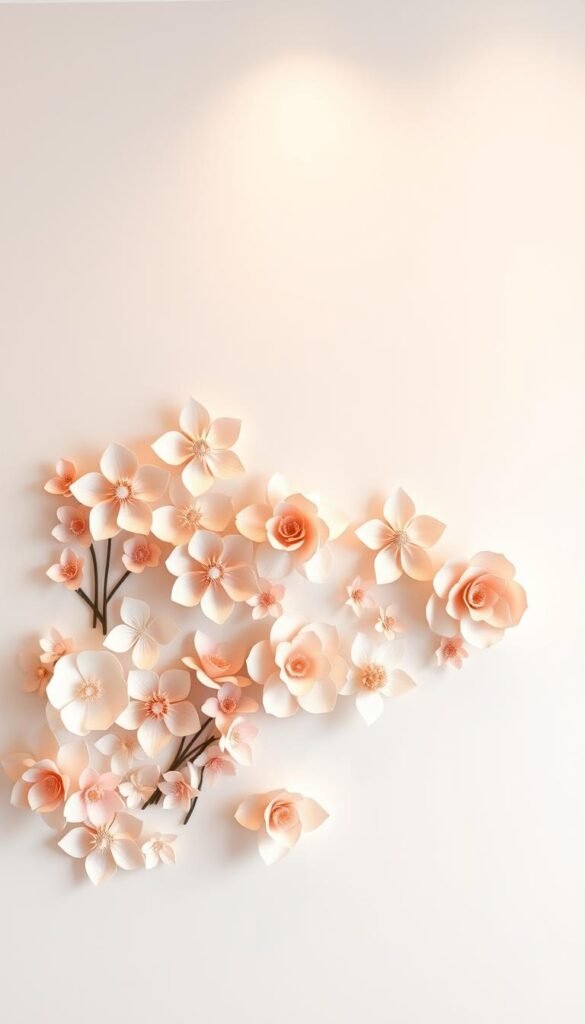
1. Elegant Paper Flower Wall Art
Adding a paper flower wall art display to your room can instantly elevate its ambiance. Paper flowers are a popular choice for wall decor due to their delicate and elegant appearance.
Materials Needed
To create your elegant paper flower wall art, you will need colored paper, scissors, glue, floral wire, and a template or pattern for the flowers. You can choose paper in various colors and textures to match your room’s decor.
Step-by-Step Creation Process
Begin by cutting out your paper flowers using the template. You can create different types of flowers, such as roses or peonies, to add variety to your display.
Crafting Different Flower Types
To craft different flower types, vary the shape and size of your petals. For example, roses have more rounded petals, while daisies have longer, thinner petals. Use different colors and patterns to make your flowers more realistic and visually appealing.
Assembling Your Wall Display
Once you have created your flowers, assemble them into a wall display by arranging them on a large piece of cardboard or directly on the wall. Use floral wire to attach the flowers to the display base or wall. Ensure the arrangement is balanced and visually appealing.
Display Tips and Variations
You can customize your paper flower wall art by using different colors, sizes, and arrangements. Consider adding other decorative elements, such as leaves or butterflies, to enhance the display. Experiment with various layouts until you find one that complements your room’s decor.
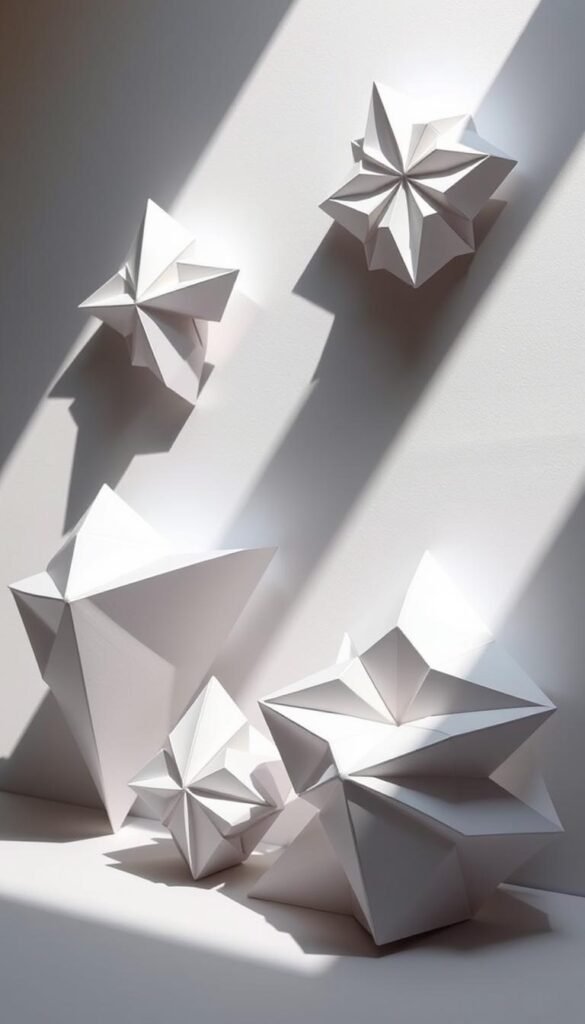
2. 3D Geometric Paper Sculptures
Make your room look amazing with 3D geometric paper sculptures. These innovative paper craft ideas for room revamping bring a modern touch to your space.
Materials Needed
You’ll need some basic stuff to make these sculptures: colored paper or cardstock, a craft knife or scissors, a ruler, a pencil, and glue. Using top-notch paper makes your sculptures last longer and look better.
Assembly Instructions
Building these sculptures takes care and patience. First, cut out the shapes and patterns you need.
Basic Geometric Forms
Begin with simple shapes like triangles, squares, and hexagons. Mix these shapes to make more complex designs. Using a template helps you get it right.
Creating Complex Structures
To make detailed designs, stack and connect the basic shapes. Glue them carefully and let it dry to keep them stable. Try different patterns and shapes for unique designs.
Placement Ideas for Maximum Impact
After you’ve made your sculptures, think about where to put them. Place them on a shelf, mantel, or as a centerpiece. This makes them a focal point and starts conversations. These sculptures are a great easy paper craft project for room decor.
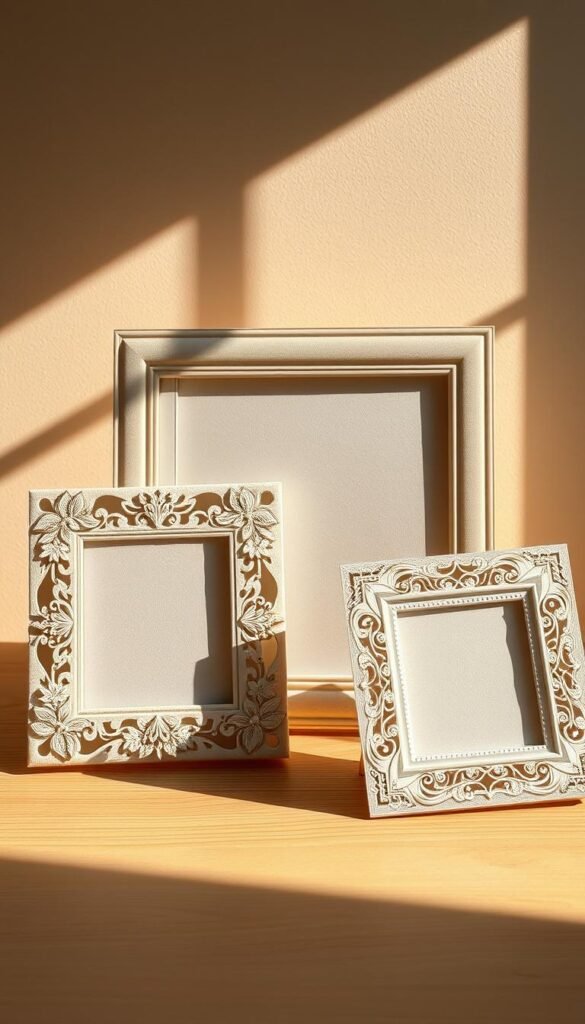
3. Personalized Paper Craft Photo Frames
With just a few simple materials, you can make beautiful, handmade paper decorations for your room. Personalized photo frames are a great example. They let you add a personal touch and display special memories.
Materials Needed
You’ll need some basic supplies to get started. You’ll need patterned paper or cardstock, scissors, glue, and a photo frame. You can also add embellishments like ribbons or stickers.
| Material | Description |
|---|---|
| Patterned Paper/Cardstock | For creating the frame’s decorative elements |
| Scissors | For cutting paper to the desired shape and size |
| Glue | For assembling the frame and attaching embellishments |
| Photo Frame | The base for your personalized photo display |
| Embellishments | Optional decorative items like ribbons, stickers, or die-cuts |
Creation Process
Creating your personalized paper craft photo frame has two main steps. First, you build the frame. Then, you add decorative elements.
Frame Construction Techniques
Start by measuring and cutting your paper to fit your photo frame. Use glue to attach it, making sure it’s smooth. You can layer different patterns for a unique look.
Decorative Elements and Embellishments
After covering your frame, add embellishments. Use ribbons for a bow or attach small items that fit your room’s theme. This is where you can really get creative.
Creative Display Options
Once your simple paper crafts for room embellishment are done, you can display them in many ways. Hang them on a wall, put them on a shelf, or use them as a centerpiece. Paper craft photo frames are versatile and easy to fit into your decor.
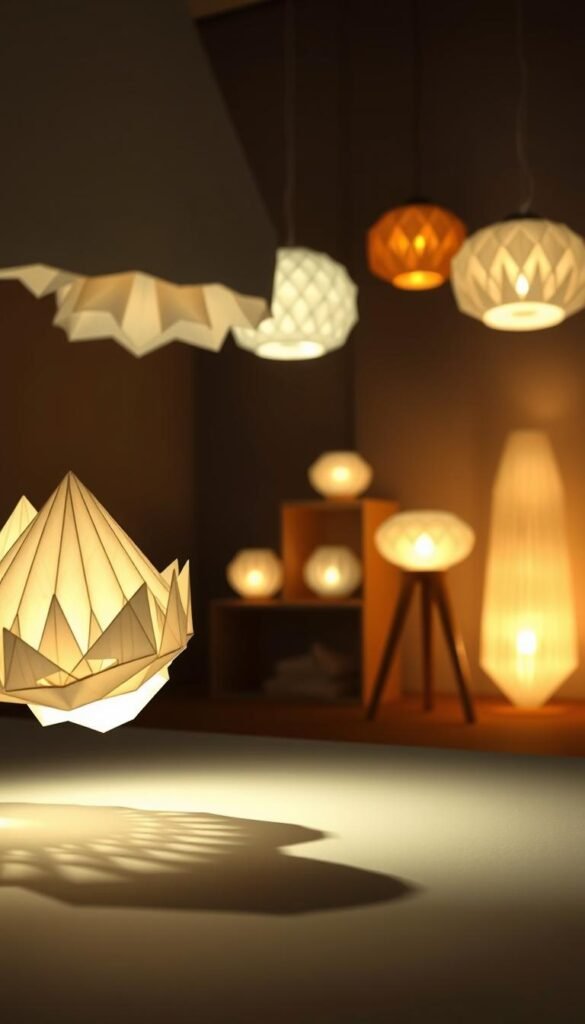
4. Origami Lampshade Transformations
Origami can turn simple lampshades into stunning art pieces. This DIY method adds elegance and creativity to your space. It’s a great way to make your lighting fixtures stand out.
Materials Needed
To begin, gather basic materials. You’ll need origami paper, a lampshade, glue or tape, and scissors. For detailed designs, a craft knife or bone folder might be necessary.
Folding Techniques and Assembly
Origami requires precise folding skills. Start with simple designs and move to complex ones as you improve. Evenly space your origami pieces for a balanced look.
Basic Origami Patterns for Beginners
Beginners should start with simple patterns like the crane or box designs. These teach basic folds for more complex designs. Online tutorials and books can help guide you.
Advanced Designs for Stunning Effects
Once you master basic patterns, try advanced designs for stunning effects. Techniques like tessellations or modular origami add detail and interest. Experiment with different papers and colors for more impact.
Lighting Considerations and Safety Tips
When decorating with origami, think about lighting and safety. Make sure the paper and adhesive don’t block light or get too close to the bulb. LED bulbs are safer for origami decorations.
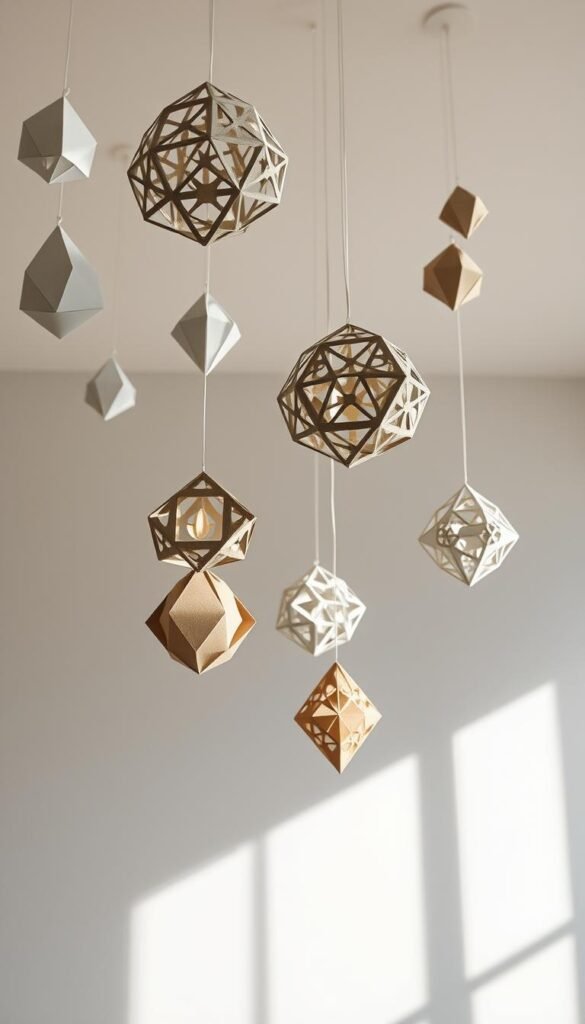
5. Paper Craft Ideas for Room Decor: Hanging Mobiles
Elevate your room’s look with hanging paper mobiles. These mobiles add movement and interest to any space.
Materials Needed
To make a hanging mobile, you’ll need colored paper or cardstock, scissors, a craft knife, glue, string or fishing line, and basic crafting tools.
Design and Construction Steps
Designing a hanging mobile means making mobile parts and putting them together.
Creating Mobile Elements
Cut out shapes or figures from colored paper or cardstock. Choose geometric shapes, flowers, or designs that match your room’s style.
Assembly and Structure
Put the elements together into a mobile shape. Use glue to stick the shapes to a central point or to each other, making sure it’s balanced.
Balancing and Hanging Tips
Make sure the mobile hangs evenly by balancing the weight. Hang it where there’s a gentle breeze.
| Material | Description |
|---|---|
| Colored Paper/Cardstock | For mobile elements |
| Scissors/Craft Knife | For cutting shapes |
| Glue | For assembly |
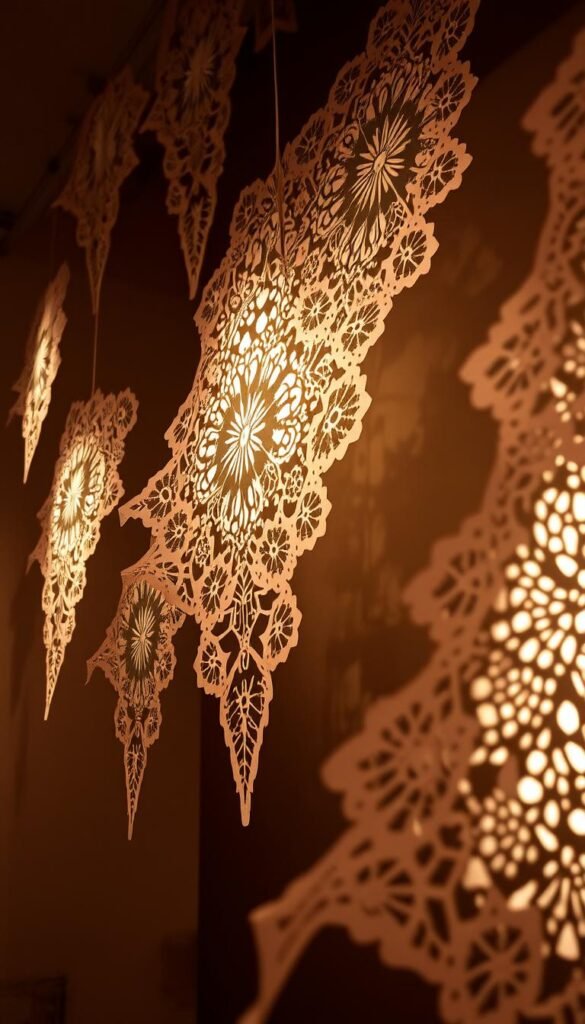
6. Intricate Paper Cut Wall Hangings
Intricate paper cut wall hangings are more than just decorations. They show off your creativity and detail focus. These delicate pieces can make any room look more sophisticated and elegant.
Materials Needed
To make these wall hangings, you’ll need a few basic things. These include:
- High-quality paper or cardstock
- A sharp craft knife or scissors
- A cutting mat
- A ruler or straightedge
- A pencil or marker
Picking the right paper is key. It affects how your piece looks and lasts.
Cutting Techniques and Patterns
Paper cutting needs precision and patience. To get detailed designs, you can try different cutting methods and patterns.
Beginner-Friendly Designs
If you’re new to paper cutting, start with simple designs. Try basic shapes or simple silhouettes. As you get better, you can tackle more complex designs.
“The simplicity of paper cutting belies its complexity and beauty.”
Advanced Layered Paper Cutting
For those who are more skilled, layered paper cutting is a great option. It adds depth and dimension to your wall hangings. This method involves cutting and stacking multiple layers of paper to create a 3D look.
Framing and Display Methods
After you’ve finished your paper cut artwork, framing and displaying it right can make it even more beautiful. Use a deep frame or shadow box for layered paper. Try different backgrounds to see what complements your artwork best.
By following these steps and tips, you can make amazing handmade room decor crafts that show off your style and creativity.
7. Modular Paper Book Shelf Decorations
Modular paper book shelf decorations add a fresh, creative vibe to your home. These easy paper craft projects for room decor are great for personalizing your bookshelves.
Materials Needed
To make your modular paper decorations, you’ll need a few things. You’ll need paper or cardstock, scissors, glue, and a ruler. Simple paper craft ideas use minimal supplies, making them easy for everyone to do.
Construction Process
Start by designing and putting together the modular pieces. Cut out the paper or cardstock into the shapes and sizes you want. You can use templates or draw them yourself.
Small Accent Pieces
For small pieces, think about making detailed designs or patterns. These can decorate the edges of your bookshelves or stand alone as ornaments.
Statement Bookend Designs
For bigger pieces, make statement bookends. These can be large and detailed, adding drama to your room.
Styling Your Bookshelf
After making your decorations, it’s time to arrange your bookshelf. Place the pieces to create interest and balance. Mix different shapes, sizes, and designs for a unique look.
| Decoration Type | Description | Materials |
|---|---|---|
| Small Accent Pieces | Intricate designs for edges or standalone ornaments | Paper/Cardstock, Scissors, Glue |
| Statement Bookends | Large, elaborate designs to anchor bookshelves | Thicker Cardstock, Scissors, Glue, Ruler |

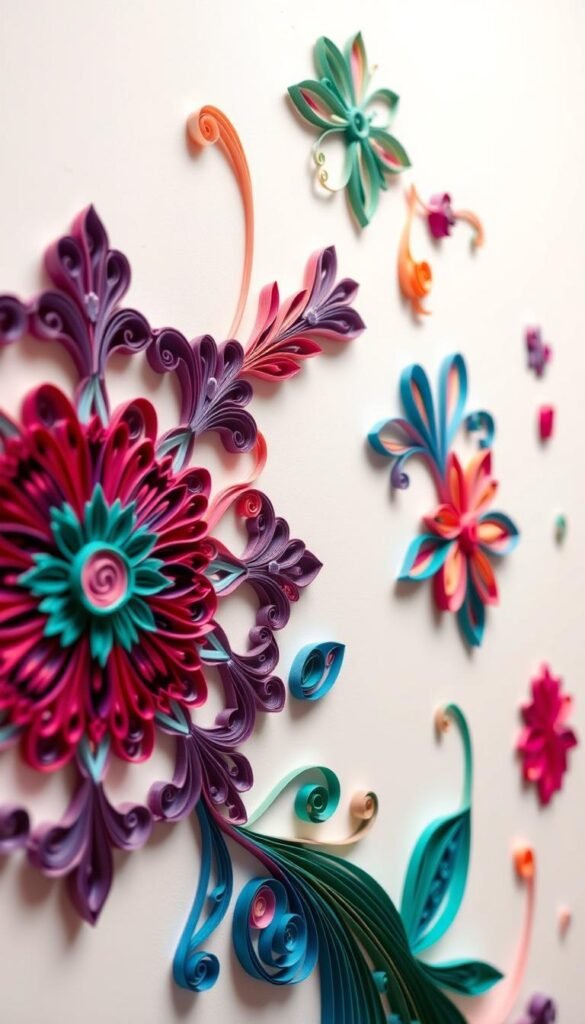
8. Paper Quilling Wall Art Designs
Paper quilling wall art combines old-world charm with a fresh look. It uses rolled and shaped paper to make detailed designs.
Materials Needed
To start paper quilling, you need a few things. You’ll need quilling paper, a quilling tool, and a place to work. Quilling paper comes in many widths and colors, letting you try out different designs.
Basic Quilling Techniques
Learning basic quilling techniques is key to making beautiful art. You’ll learn to roll, shape, and arrange coils into various forms.
Essential Quilling Shapes
Important quilling shapes include loose coils, tight coils, and twisted coils. These can be used to make simple or complex designs.
Combining Elements into Patterns
After mastering basic shapes, you can mix them to create patterns. You can make symmetrical or asymmetrical designs, depending on what you like.
Creating Complete Art Pieces
To finish your art, arrange your quilling into a complete piece. You can frame it or mount it on a canvas.
| Quilling Shape | Description | Usage |
|---|---|---|
| Loose Coil | A coil that is not tightly wound | Used for creating flowing designs |
| Tight Coil | A coil that is tightly wound | Used for creating detailed designs |
| Twisted Coil | A coil that is twisted while rolling | Used for adding texture to designs |
By following these steps and practicing, you can make amazing wall art. It will add elegance to any room.
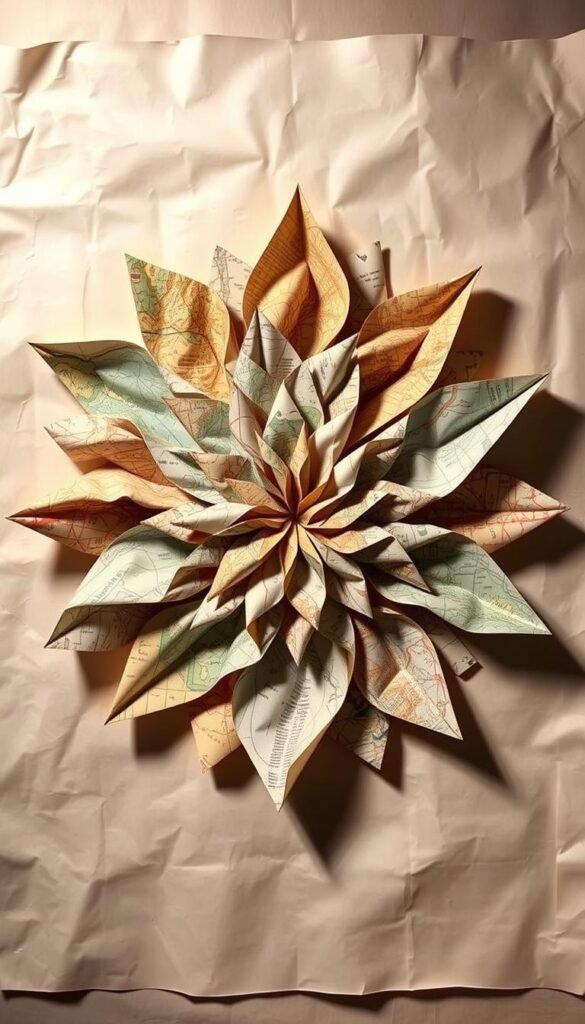
9. Upcycled Paper Map or Book Page Decor
Upcycling paper maps and book pages lets you make unique decor. It adds a personal and nostalgic touch to your room.
Materials Needed
To start, you’ll need old maps or book pages, decoupage medium or glue, scissors, and a surface or frame. You can also use paint, markers, or other embellishments to make your design stand out.
Transformation Techniques
There are several ways to transform old maps and book pages into beautiful decor. You can decoupage them onto furniture or frames, cut them into shapes or designs, or create 3D objects.
Map-Based Projects
For map-based projects, highlight significant locations or routes before decoupaging. You can also make a collage or cover objects like vases or boxes. Emphasizing the map’s texture and color adds depth to your decor.
Book Page Transformations
Book pages can be turned into paper flowers, bookmarks, or even a unique lampshade. You can roll or fold them to create designs or 3D sculptures. Using vintage book pages adds an antique feel.
Nostalgic Display Ideas
After upcycling, there are many ways to display your maps and book pages. Frame them as wall art, use them as a decorative cover, or in a shadow box. Grouping multiple pieces creates a nostalgic vignette that tells a story.
- Use old maps to create a unique wall collage.
- Decoupage book pages onto furniture for a vintage look.
- Transform book pages into 3D flowers or other decorative elements.
Upcycling old maps and book pages creates beautiful and unique decor. It also gives new life to forgotten materials, making your space special.
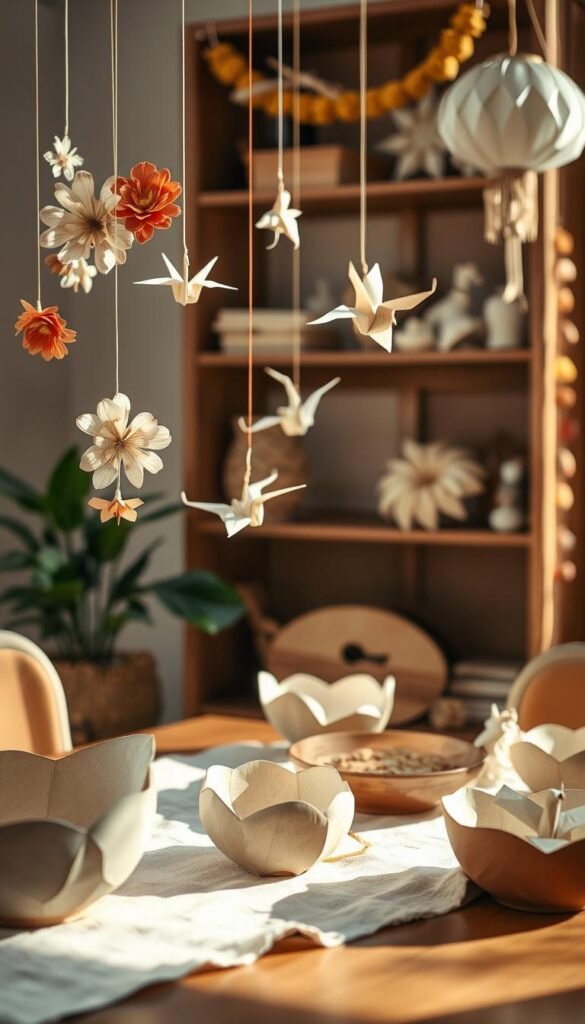
10. Paper Mache Decorative Bowls and Objects
Paper mache is a fun and versatile technique for making decorative items. It’s a great project for all ages. It can add a personal touch to any room.
Materials Needed
To start with paper mache, you’ll need a few basic things. These include:
- Newspaper or paper strips
- Glue or flour paste
- Water
- A balloon or mold
- Paint and varnish
Molding and Shaping Process
Creating paper mache decorative bowls and objects involves several steps. First, you’ll need to make the base structure using a balloon or mold.
Creating the Base Structure
Start by blowing up a balloon to the size you want for your bowl or object. Then, apply layers of paper mache. Let each layer dry before adding the next. This makes a sturdy base for your piece.
Finishing and Decorating Techniques
After the paper mache dries, pop the balloon and trim the edges for a smooth finish. Then, paint and varnish your bowl or object. This adds color and protection.
Practical Uses Around Your Room
Paper mache decorative bowls and objects have many uses. They can be:
- A centerpiece on a coffee table
- A decorative storage container
- A unique wall hanging
These handmade paper decorations can make your space more personal. They’re a great way to show off your creativity.
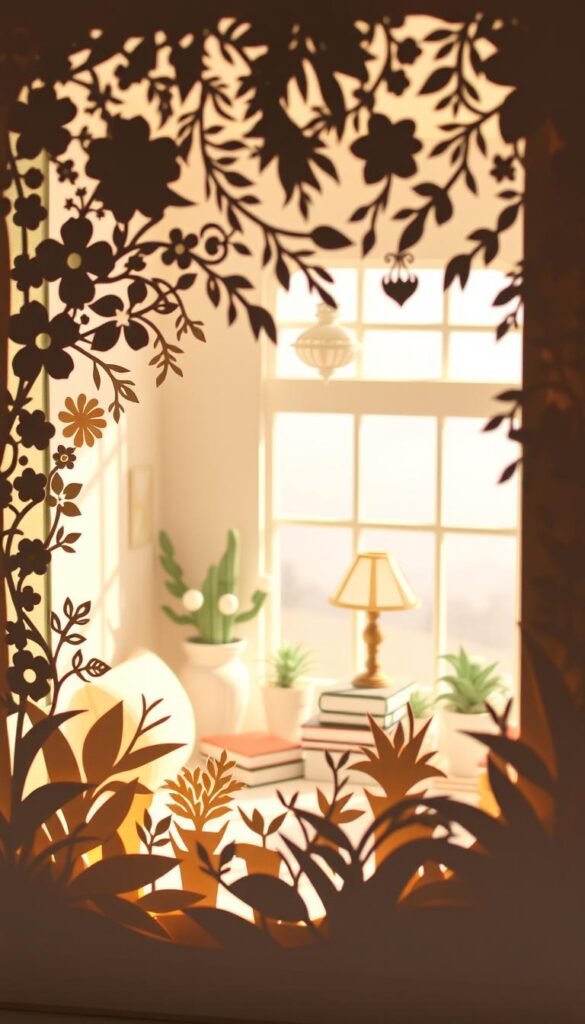
11. Kirigami Pop-Up Room Decorations
Elevate your home decor with kirigami pop-ups. This art form combines paper cutting and folding. It turns your living space into a masterpiece of designs and visuals.
Materials Needed
To make kirigami pop-ups, you need a few things. These include:
- High-quality paper or cardstock
- A sharp cutting tool, such as a craft knife or scissors
- A ruler or straightedge
- A pencil or marker for designing
- Adhesive, like glue or tape, for assembly
| Material | Description | Usage |
|---|---|---|
| Paper/Cardstock | High-quality, thick, or textured | Base material for kirigami designs |
| Craft Knife/Scissors | Sharp, precise cutting tools | Cutting intricte designs |
| Ruler/Straightedge | Straight, flat tool | Drawing straight lines, measuring |
Cutting and Folding Techniques
The essence of kirigami is in its cutting and folding. Mastering these skills is key to making detailed pop-up designs.
Simple Pop-Up Designs for Beginners
Beginners should start with simple designs. Start with basic cuts and folds. As you get better, move to more complex patterns. Practice makes perfect, and you’ll soon create stunning pop-ups.
Complex Architectural Pop-Ups
Once you’ve got the basics down, try more complex designs. These need detailed cuts and precise folds. Attention to detail is essential for these designs.
Display Strategies
Displaying your kirigami pop-ups right can make them stand out. Place them against a plain background or use them as centerpieces. Try different lighting setups to show off the details of your art.
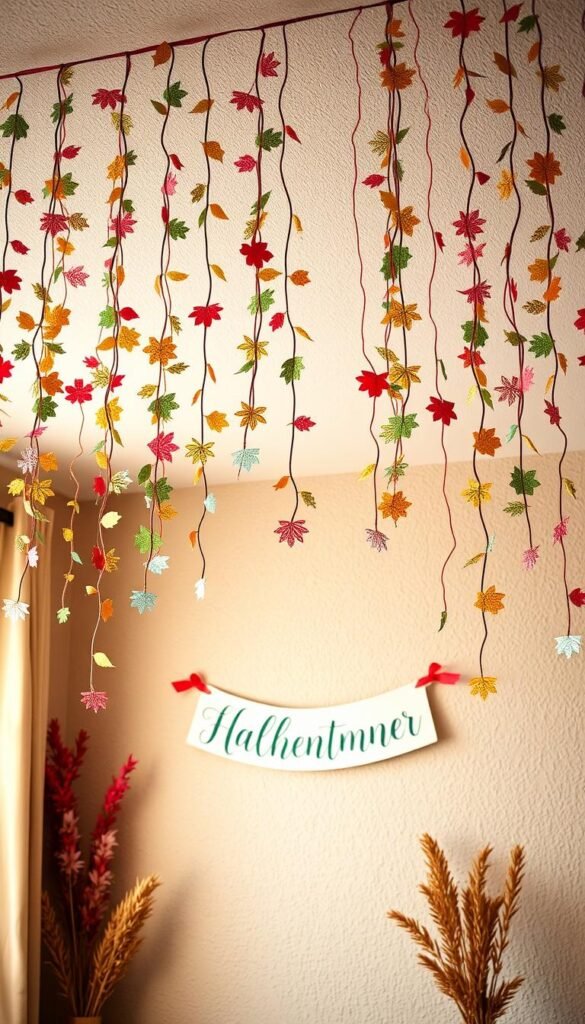
12. Seasonal Paper Garlands and Bunting
Celebrate the changing seasons with beautiful, handmade paper garlands and bunting. They add a personal touch to your space. DIY room decor with paper crafts is a fun and creative way to refresh your room’s ambiance throughout the year.
Materials Needed
To create your seasonal paper garlands and bunting, you’ll need colored paper or cardstock, scissors, glue or a string, and any additional decorations like glitter or stickers that fit your seasonal theme.
Design and Assembly
Designing your garlands and bunting involves choosing colors and patterns that match the current season. For example, pastel colors for spring or warm tones for autumn.
Cutting and Preparing Elements
Cut out your chosen shapes or letters from the colored paper. You can use templates or draw the shapes freehand. Prepare all elements before assembly to ensure a smooth process.
Connecting and Hanging Techniques
Use glue or string to connect your cut-out elements into a garland or bunting. For hanging, you can tie the garlands between furniture or along windows. Experiment with different hanging techniques to achieve the desired visual effect.
Seasonal Variation Ideas
Update your garlands and bunting seasonally by changing colors, shapes, or themes. For instance, use snowflakes in winter or flowers in spring. This keeps your decor fresh and engaging throughout the year, embodying the spirit of simple paper crafts for room embellishment.
As
“The way to get started is to quit talking and begin doing.” – Walt Disney
, start crafting your seasonal paper garlands and bunting today. Enjoy the process of transforming your space.
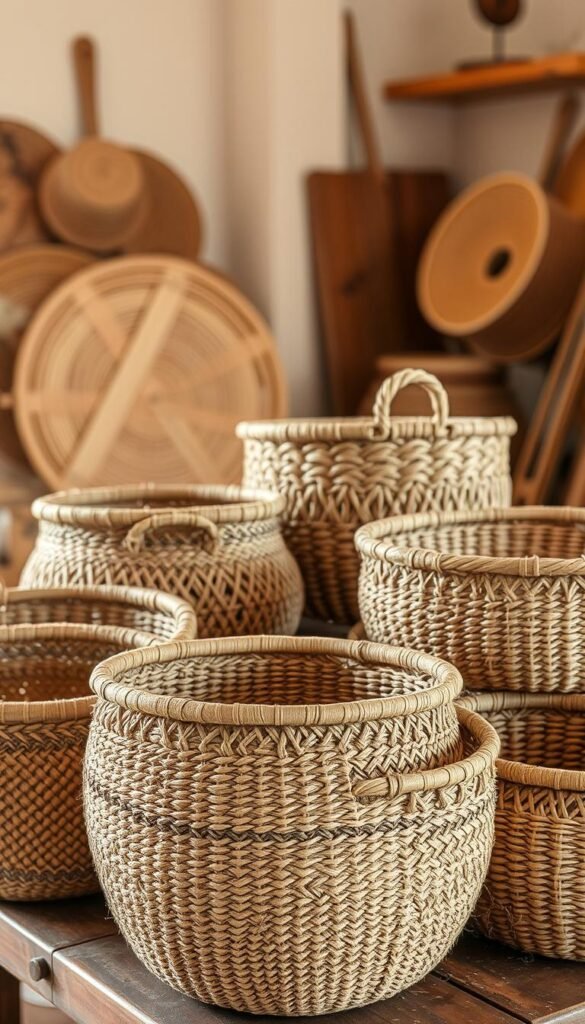
13. Paper Woven Basket Storage Solutions
Adding handmade charm to your room is easy with paper woven baskets. These baskets are not just useful for storing things. They also make your home look better.
Materials Needed
To make your paper woven basket, you’ll need a few things: colored paper or cardstock, scissors, glue, a ruler, and a pencil. Pick paper that matches your room’s style.
Weaving Techniques
Paper weaving is all about weaving paper strips to make a strong and pretty basket. Here’s how to do it:
Preparing Paper Strips
Start by cutting your colored paper into strips that are all the same width. The width depends on the look you want. Strips that are 1-2 inches wide are usually good.
Basket Construction Methods
Make the basket’s base with your paper strips. Glue them together. As you add more sides, try different patterns and colors for a unique look.
Practical Uses Around Your Room
After making your basket, you can use it to store books, magazines, or craft supplies. It’s also great as a decorative item on a shelf or desk. It adds a special touch to your room.
| Storage Use | Decorative Aspect |
|---|---|
| Storing books and magazines | Adding color and texture to a room |
| Holding craft supplies | Creating a unique conversation piece |
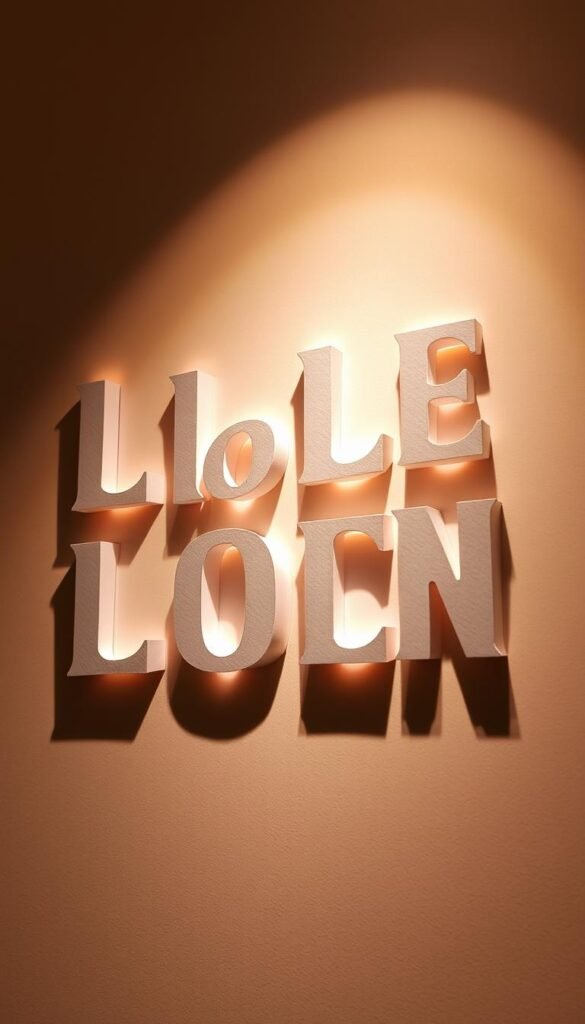
14. Dimensional Paper Letters and Monograms
Dimensional paper letters and monograms can make any room look better. They add a personal touch and become a unique conversation starter.
Materials Needed
To make dimensional paper letters and monograms, you’ll need a few things. You’ll need patterned paper or cardstock, a craft knife or scissors, and a cutting mat. You’ll also need glue and a template or stencil. You can also use glitter, stickers, or ribbons for extra flair.
Construction Methods
Making dimensional paper letters involves a few steps. First, you need to make a template or use one you already have. Then, cut out the letters or shapes from your chosen paper or cardstock.
Template Creation and Cutting
To make a template, you can draw the letters or monograms on cardstock or use a computer program. Once you have your template, cut out the shapes carefully with a craft knife or sharp scissors.
Building Depth and Dimension
To add depth to your paper letters, layer multiple cutouts together. Use small foam tape or spacers to space them out. This creates a 3D effect that makes the letters pop. You can also play with different patterns and colors to make it more interesting.
Personalization Options
One great thing about dimensional paper letters and monograms is how customizable they are. You can pick the size, color, and pattern to fit your room’s style. Adding a personal name or special message makes it even more special.
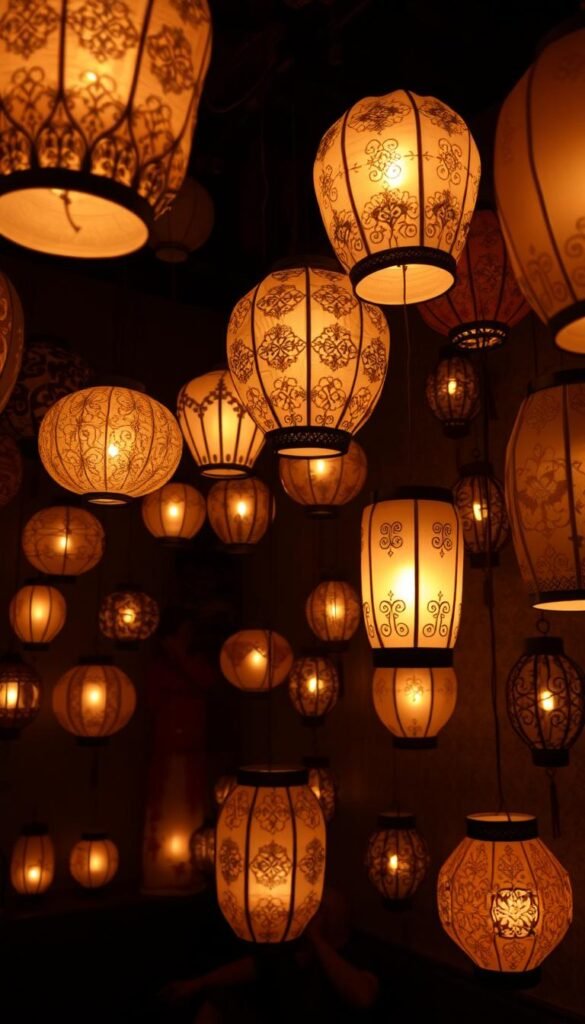
15. Illuminated Paper Lanterns and Light Fixtures
Illuminated paper lanterns can make any room feel warm and welcoming. They are a perfect example of innovative paper craft ideas for room revamping. They can turn your space into a cozy retreat.
Materials Needed
To make illuminated paper lanterns, you’ll need paper or thin cardstock, a light source like LED candles or fairy lights, scissors, glue, and a string or wire for hanging. Picking the right materials is key for both looks and safety.
Creation Process with Safety Considerations
Make sure the paper isn’t too thin, as it might not handle the heat from the light. Use LED candles or fairy lights, which are cool and safer than regular candles.
Designing Your Lantern Structure
Start by cutting out the paper into your desired shape and size. You can use templates or draw it yourself. Remember to leave space for the light and for hanging.
Safe Lighting Options
Choose battery-operated LED candles or fairy lights for lighting. They’re safer and more energy-efficient. Make sure the light is securely inside the lantern to avoid accidents.
Ambient Lighting Effects
The soft glow of illuminated paper lanterns creates a warm, intimate atmosphere. It’s perfect for crafty room decoration ideas. Hang them in a cluster or spread them out for the right lighting effect.
By following these steps and keeping safety in mind, you can enjoy beautiful, unique illuminated paper lanterns. They will enhance your room’s ambiance.
Conclusion: Bringing Your Paper Craft Vision to Life
Now that you’ve seen 15 creative paper craft ideas for room decor, it’s time to get creative. You can turn your living space into something special. From beautiful paper flower wall art to glowing paper lanterns, the possibilities are endless.
Start your crafting adventure by trying out different materials and techniques. This will make each project truly yours. Whether you’re experienced or new to crafting, there’s always something new to discover in paper crafting.
So, grab your materials and let your creativity shine. Begin bringing your paper craft dreams to life. With these ideas, you’ll create a unique and stunning space that shows off your personality and style.