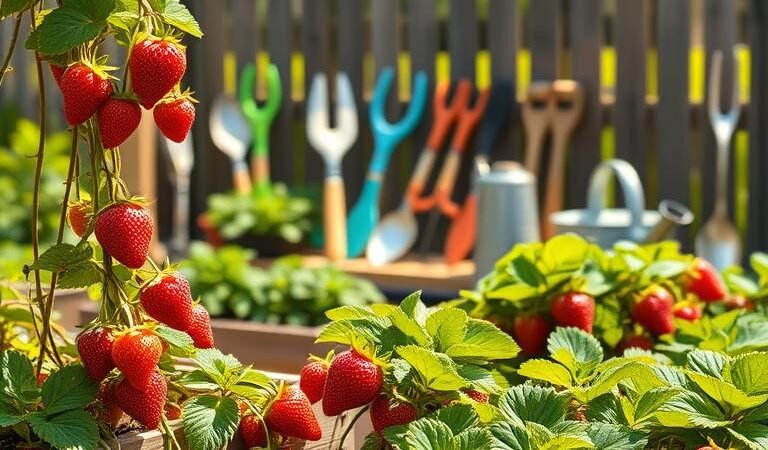
Growing strawberries in DIY planters is a fun way to enjoy fresh fruit from your garden. Strawberries are easy to grow in many climates and add beauty to your garden. This article will show you how to make easy DIY strawberry planters. You’ll learn how to grow delicious strawberries in no time.
Key Takeaways
- Explore the benefits of growing strawberries at home.
- Learn about different types of strawberry plants suitable for DIY planters.
- Choose the right type of planter for optimal growth.
- Gather essential materials and tools for your DIY project.
- Discover best practices for caring for your strawberry plants.
- Engage with the gardening community to share your harvest journey.
Why Grow Strawberries at Home?
Adding strawberries to your garden is rewarding. As you grow these tasty berries, you’ll enjoy their health perks. It’s not just about the taste; it’s also about the sense of achievement and happiness.
The Health Benefits of Strawberries
Strawberries are full of good stuff. They’re rich in vitamin C, antioxidants, and have anti-inflammatory effects. These berries can boost your immune system and help your heart stay healthy.
They also support good digestion because of their fiber. Growing strawberries at home means you can enjoy these health benefits anytime.
The Joy of Gardening
Gardening is more than just growing plants. It connects us to nature and is a great workout. It’s also good for our minds, helping us relax and reducing stress.
Working on your garden, like growing strawberries, teaches patience and builds community. Every step, from planting to harvesting, brings happiness and fulfillment.
Understanding Strawberry Plants
Growing strawberries at home can be a fun adventure. Knowing about the different types of strawberry plants and what they need to grow well is key. Each type of strawberry plant has its own preferences. It’s important to pick the right one for your garden.
Types of Strawberry Plants
There are three main types of strawberry plants:
- June-bearing: These plants give a big harvest in late spring to early summer. They’re great for those who want a lot of strawberries at once.
- Ever-bearing: These strawberries produce fruit all summer long. They give smaller but steady yields, perfect for snacking all summer.
- Day-neutral: These strawberries grow fruit no matter the day length. They’re good for growers who want to pick strawberries for a long time.
Growth Conditions for Strawberries
To grow strawberries well, you need the right conditions. The best place for them includes:
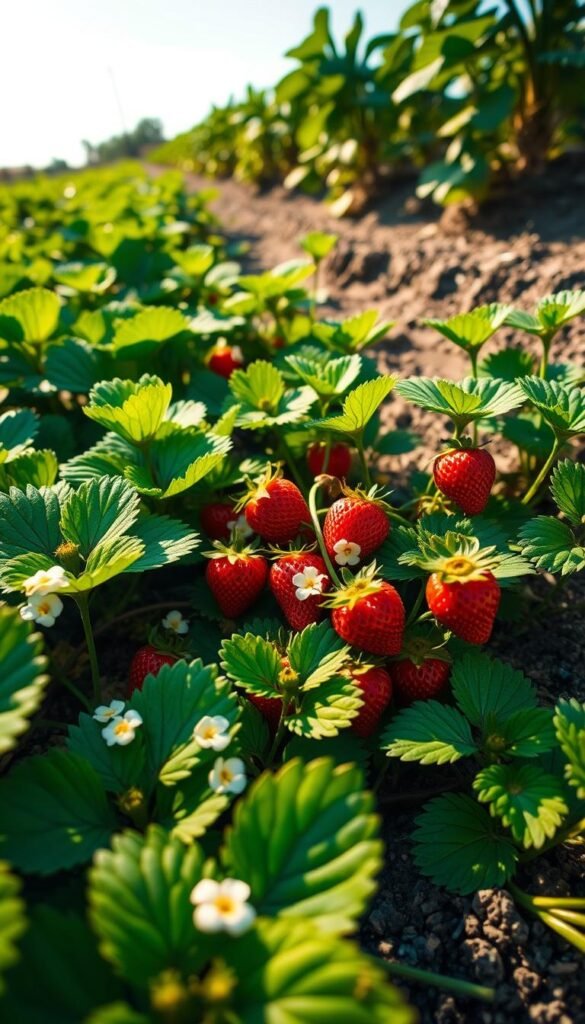
- Soil that drains well and has a pH between 5.5 and 6.5.
- At least 6 to 8 hours of sunlight a day.
- Water them regularly but avoid making the soil too wet to help roots grow deep.
Choosing the Right Planter for Strawberries
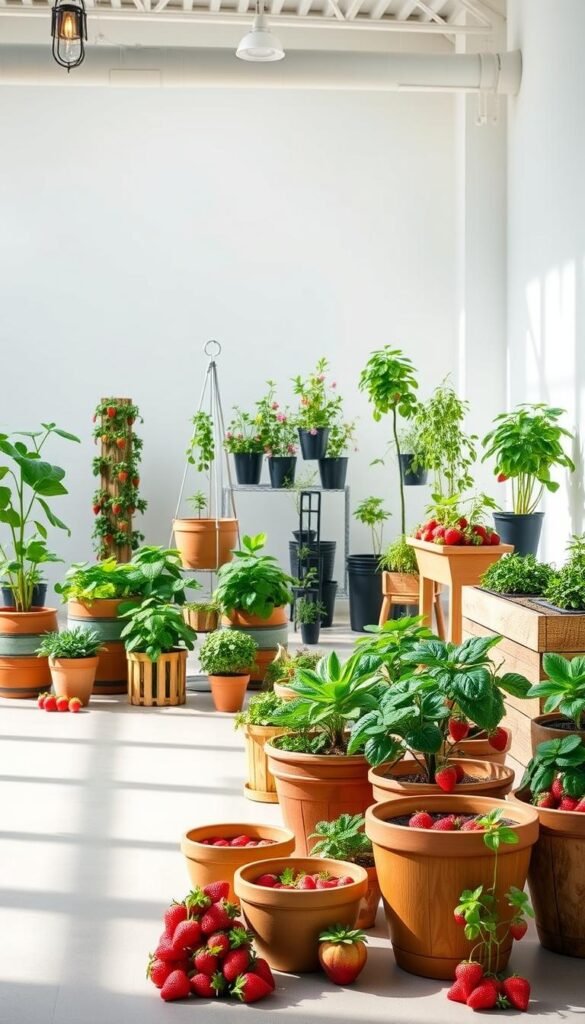
Choosing the right planter is key for growing strawberries. You can pick from pots, raised beds, or hanging baskets. Each has its own benefits, fitting different spaces and gardening styles.
Pot vs. Raised Beds vs. Hanging Baskets
Pots are great for small spaces, like balconies or patios. Raised beds offer more room for roots and better drainage. They’re best for bigger gardens.
Hanging baskets add beauty and are perfect for vertical gardening. They’re ideal for small areas or to add visual interest.
Material Options for DIY Planters
Choosing the right materials for DIY planters is important. You can use wood, plastic, or even repurposed items. Each material has its own advantages:
| Material | Benefits | Drawbacks |
|---|---|---|
| Wood | Natural look, good insulation | Can rot over time, requires maintenance |
| Plastic | Lightweight, inexpensive | Poor insulation, can fade |
| Repurposed Materials | Eco-friendly, unique designs | May need modifications for drainage |
Knowing these details helps your strawberries grow well. The right planters and materials make growing strawberries fun and rewarding.
Strawberry Planters DIY: Materials You Will Need
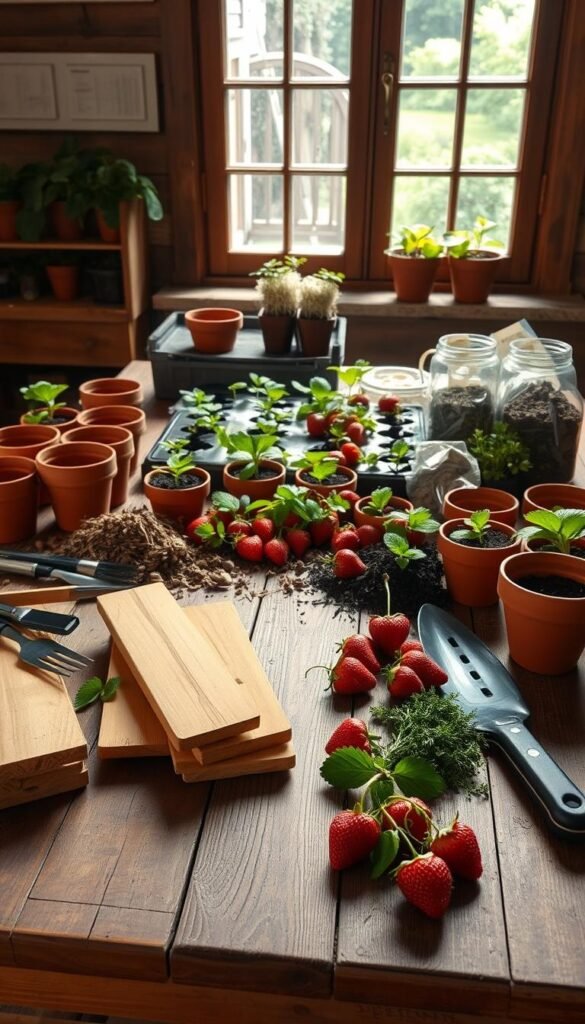
Starting your DIY strawberry planter project requires some basic materials and tools. Choosing the right materials is key to your gardening success. Let’s explore the essential tools and the best soil for strawberries to help your plants thrive.
Essential Tools
To begin your DIY project, you’ll need these essential gardening tools:
- Wood saws (for cutting wood to size)
- Drills (to assemble the planters)
- Soil scoops (for transferring soil and fertilizer)
- Measuring tape (to ensure accurate dimensions)
- Gloves (to protect your hands during assembly)
Soil and Fertilizer Choices
The right soil is critical for strawberry health and growth. Choose a high-quality potting mix or a strawberry-specific blend. Adding organic compost can boost nutrient levels and soil structure. For fertilizers, pick ones high in potassium to help with fruit growth.
Regularly check the soil’s pH and nutrient levels. This ensures your strawberries grow in the best conditions.
| Material Type | Description | Purpose |
|---|---|---|
| Wood | Durable and versatile for planter boxes | Structure stability |
| Soil Mix | High-quality, well-draining mix | Ideal growing medium |
| Fertilizer | Organic or slow-release options | Nutrition for healthy growth |
Step-by-Step Guide to Creating Your DIY Planters
Making your own strawberry planters adds a personal touch to gardening. This guide offers practical tips and inspiration for all gardeners. It helps you mix beauty with function, making sure your strawberries grow well.
Design Ideas for Creative Strawberry Planters
Design choices are endless. Here are some ideas to get you started:
- Vertical Planters: Use space wisely with stacked boxes for easy access and a unique look.
- Hanging Planters: Hang baskets or wall-mounted boxes to save space and look great.
- Tiered Planters: Build multi-level systems for a beautiful display and enough sunlight for each level.
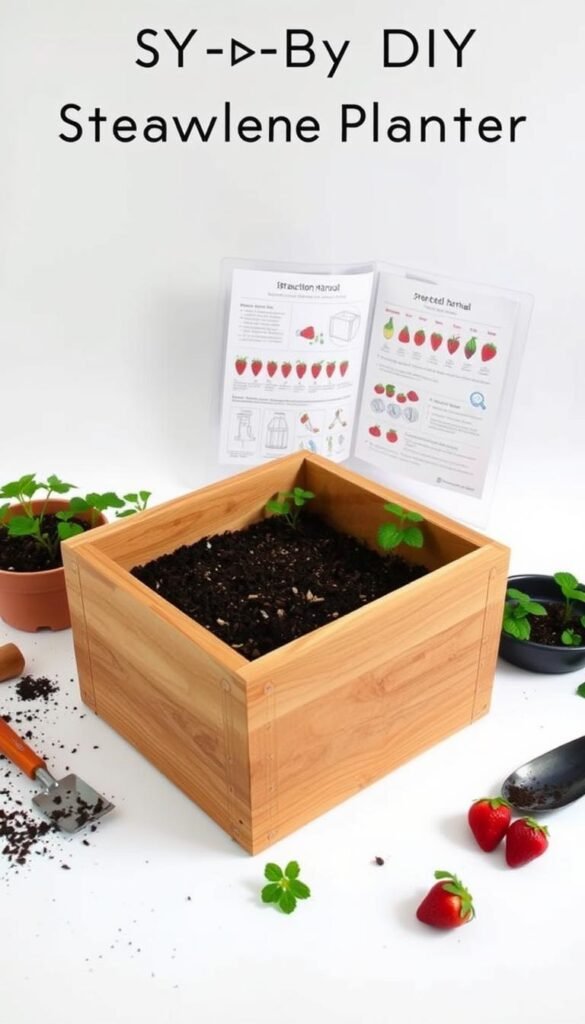
Building a Simple Planter Box
Building planter boxes is easy with the right tools and materials. Here’s a simple guide:
- Get your materials: wood (like cedar or redwood), nails or screws, drill, measuring tape, and a saw.
- Measure and cut the wood into these sizes:
Part Dimensions (inches) Long sides 36 Short sides 24 Bottom panel 36 x 24 - Put the box together by attaching the long sides to the short sides, then add the bottom panel.
- Drill holes in the bottom panel to stop water from building up.
- Finish with a sealant or paint to make it last longer.
By following this guide, your DIY strawberry planter will be both strong and beautiful. Enjoy making planter boxes that are perfect for growing strawberries!
Planting Strawberries in Your DIY Planters
Timing is key when planting strawberries. It ensures your plants grow well and produce lots of fruit. Knowing when to plant and how to space them is important for their health.
Timing Your Planting
Plant strawberries in early spring or late fall for the best results. Spring planting lets them grow roots before summer gets hot. Fall planting gives them a start before winter.
This timing helps your strawberries grow in the best weather.
Spacing and Depth Guidelines
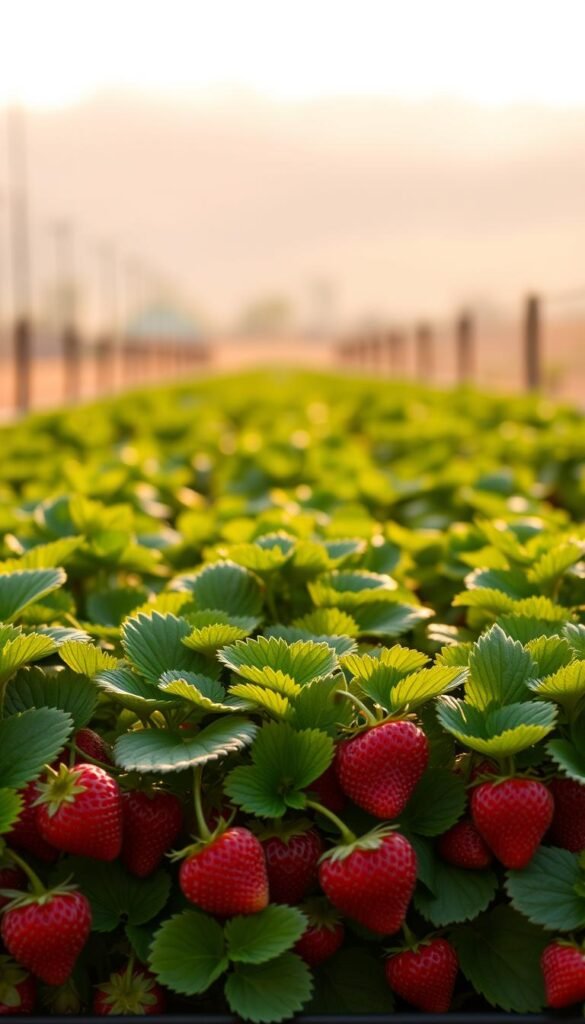
Spacing and depth are vital for strawberry success. Plant them 12 to 18 inches apart for good air flow. This prevents diseases.
Plant at a depth of 6 to 12 inches. This lets their roots grow well. Following these tips will help your strawberries grow strong and produce lots of fruit.
| Criteria | Recommended Measurement |
|---|---|
| Spacing Between Plants | 12-18 inches |
| Row Spacing | 2-3 feet |
| Depth for Planting | 6-12 inches |
Best Practices for Strawberry Care
Proper care of strawberry plants can greatly improve your harvest. Knowing how to care for them ensures they stay healthy and productive. Paying attention to watering and fertilizing on schedule helps them grow strong and produce more fruit.
Watering Techniques for Successful Growth
Watering strawberries needs careful attention to soil moisture. Keep the soil moist but not too wet. Using drip irrigation helps water reach the roots deeply and saves water. Watering in the morning helps prevent evaporation and disease.
Try to water about one inch per week. Adjust this based on the weather.
Fertilization Schedule and Tips
Having a fertilization routine is essential for strawberry plants. Use organic fertilizers like compost or well-rotted manure for a natural boost. If you prefer synthetic fertilizers, choose ones made for strawberries.
Fertilize once in early spring and again after the first harvest. This ensures your plants get the nutrients they need for healthy fruit.
Maintaining Your Strawberry Plants Throughout the Seasons
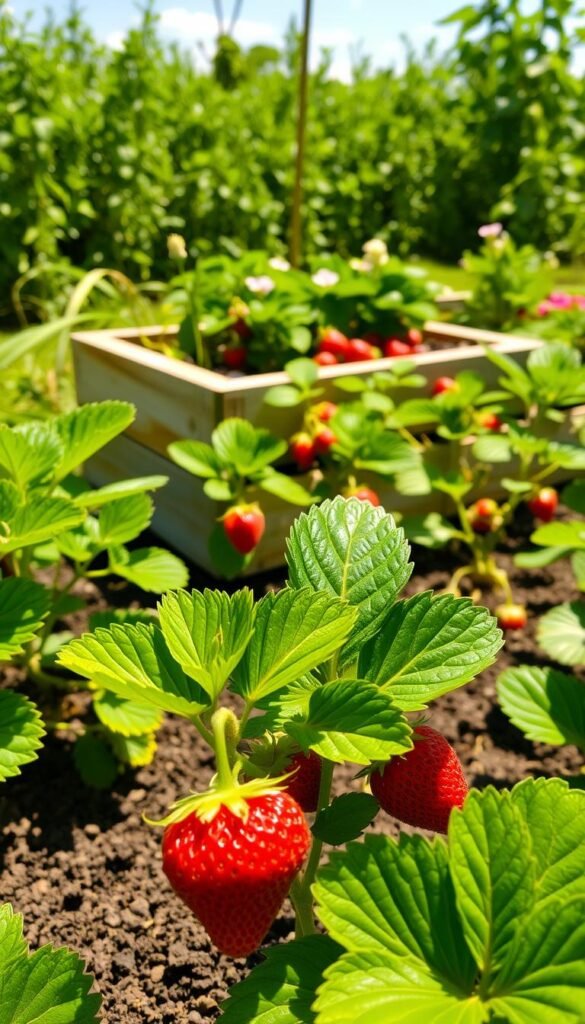
Keeping your strawberry plants healthy is key to a good harvest. Each season brings its own set of challenges and chances. Let’s look at the important steps to keep your strawberry plants thriving.
Winter Care for Container Strawberries
Winter care for strawberries is vital. Insulating pots keeps roots from freezing. Wrap the base of containers with burlap or straw to trap heat.
If it gets really cold, move pots to a warmer spot. Or wrap them in bubble wrap for extra protection. This helps your plants make it through the cold.
Spring Cleanup and Runners Management
When it gets warmer, it’s time for spring cleanup. Start by removing dead or rotting leaves. This stops diseases from spreading.
Also, clear away any debris to let sunlight in. Managing runners is important too. Cut off extra runners to help the plant focus on growing fruit. This boosts yields and keeps plants healthy.
Creative Strawberry Planter Designs
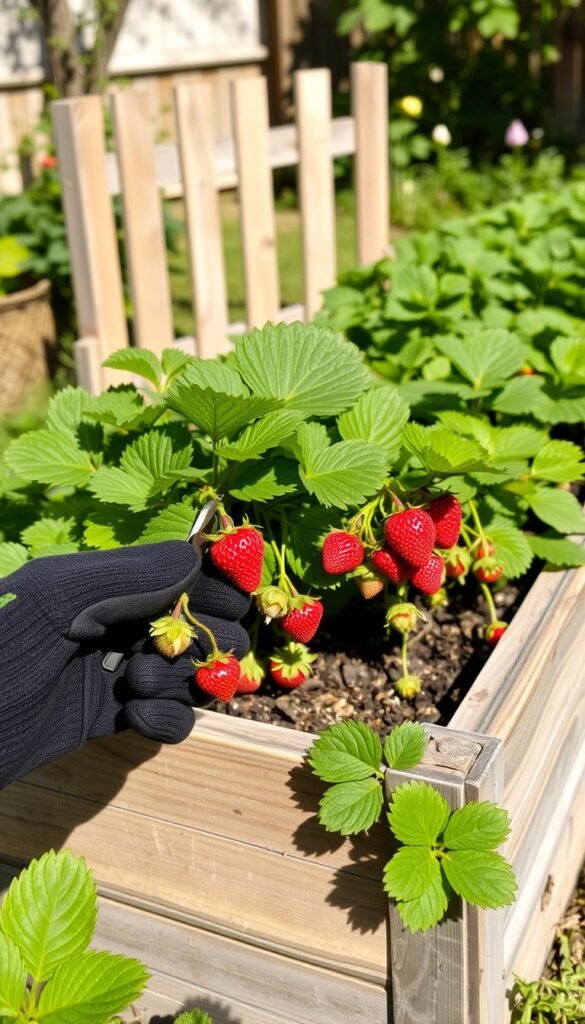
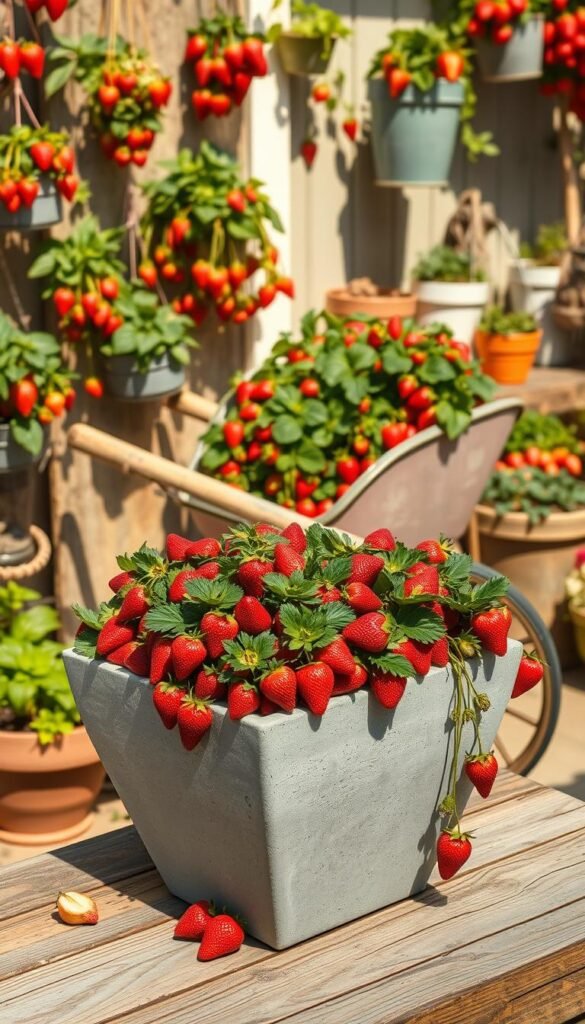
Adding fun to gardening can lead to amazing strawberry planter designs. Many gardeners get creative with upcycled projects. They use old crates, pallets, or even hanging shoe organizers. This way, they show off their style and help the planet by reusing items.
Upcycled Strawberry Planter Projects
Upcycled strawberry planters bring a fresh look to gardening. An old wooden crate is perfect for drainage and adds a rustic touch. Pallets can be turned into vertical planters, saving space and adding charm.
Old buckets or barrels make striking planters. A coat of paint can make them even more beautiful. These ideas show how to make gardening eco-friendly and stylish.
Hanging Strawberry Planter Ideas
Hanging strawberry planters are a great way to use space. Hanging baskets or tiered planters let you grow strawberries without taking up too much room. A shoe organizer hung on a wall is another clever idea.
It has pockets for strawberries, making care easy. These designs not only save space but also make your garden look lively and colorful.
Troubleshooting Common Strawberry Growth Issues
Strawberries can face problems like pests, diseases, and bad weather. Fixing these issues quickly helps your plants grow well and increases your harvest. It’s important to know how to spot problems early to keep your strawberries healthy. Here are some common issues and how to fix them to boost your strawberry yield.
Identifying Common Pests and Diseases
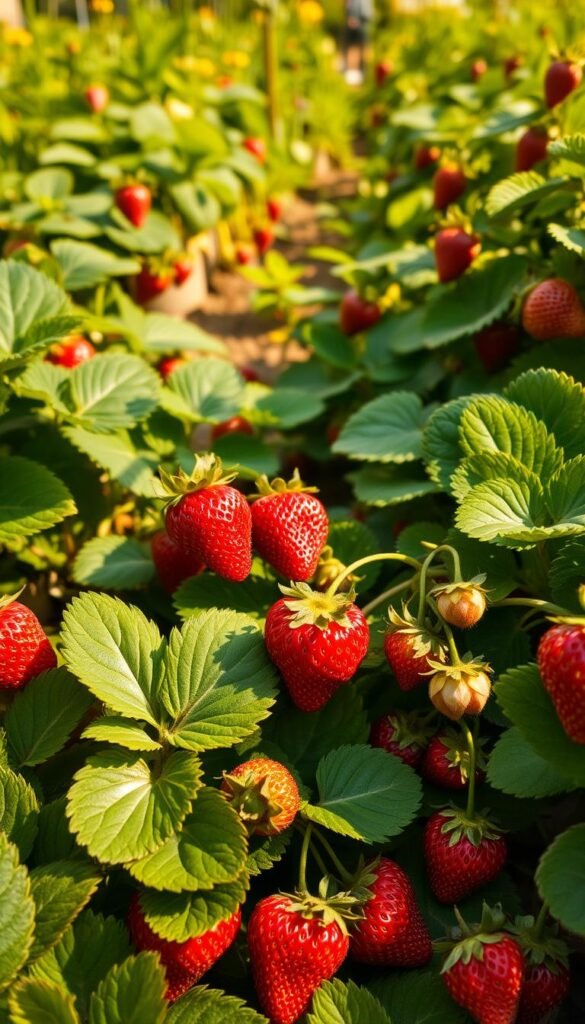
Aphids, spider mites, and whiteflies can harm your plants and lower fruit production. Spotting these pests is a key part of caring for your strawberries. Diseases like powdery mildew and root rot can also hurt growth. Keep an eye on your plants’ leaves and stems to catch these problems early.
Solutions for Poor Yield
If your strawberries aren’t growing as much as you’d like, there could be several reasons. Check if your plants are too close together, as this can block air and nutrients. Soil tests can show if your soil lacks nutrients, helping you fix this. Adjusting your fertilizer based on the test results can help your strawberries grow better.
Keeping your plants healthy is also key. Make sure they get enough water and sunlight. Stressed plants often don’t produce as much fruit.
Storage and Preparation of Your Strawberry Harvest
After a rewarding strawberry harvest, the next challenge is how to enjoy your delicious fruits. Storing them right can keep their quality and flavor. Plus, trying new strawberry recipes can make your meals even better.
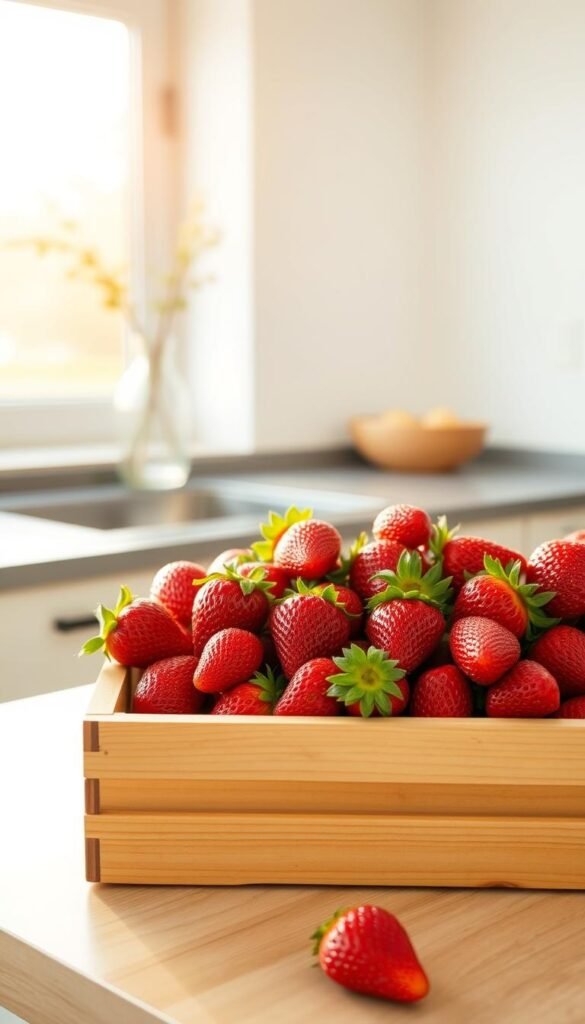
Methods for Storing Fresh Strawberries
To keep your strawberries fresh, try these methods:
- Refrigeration: Put strawberries in the fridge to keep them fresh. Use a breathable container with paper towels to soak up moisture.
- Freezing: Wash and dry strawberries, then freeze them on a baking sheet. Once solid, put them in a sealed bag for later.
- Avoid washing: Don’t wash berries until right before you eat them to avoid spoilage.
Creative Strawberry Recipes
With your strawberries ready, try these tasty recipes:
- Strawberry shortcake: A classic dessert with layers of sweetened strawberries and whipped cream.
- Strawberry salad: Mix fresh strawberries with greens, nuts, and a light vinaigrette for a refreshing salad.
- Strawberry preserves: Cook strawberries with sugar and lemon juice to make tasty spreads for toast or desserts.
Engaging the Community: Share Your Strawberry Journey
Connecting with others who love gardening can make growing strawberries more fun. Joining community gardening groups helps you make friends and learn new things. These groups are great for sharing tips and celebrating each other’s gardening wins.
They often have events where you can meet and share your harvests. It’s a wonderful way to connect and grow together.
Participating in Local Gardening Groups
Local gardening groups are places where people with a love for plants come together. They organize workshops, seed swaps, and projects that help everyone. It’s a space where both new and experienced gardeners can learn from each other.
By sharing your strawberry-growing story, you get support and celebrate your achievements. It’s a great way to grow and learn together.
Sharing Your Results on Social Media
Sharing your strawberry garden on social media is a great way to show off your hard work. Posting pictures and updates can inspire others. It creates a friendly space where everyone can share their gardening stories.
This not only makes your gardening journey better but also builds a strong online community. It’s all about sharing and growing together.

Conclusion
Starting a strawberry garden with DIY planters is a rewarding hobby. It’s not just fun; it also boosts your health. You get to enjoy fresh, healthy strawberries right in your backyard.
The joy of growing your own plants is unmatched. It’s a chance to connect with nature and get creative. You’ll learn a lot and improve your gardening skills.
Sharing your gardening stories with friends or local groups adds to the fun. It makes your gardening journey even more special.
Planting strawberries in DIY planters is great for your health and happiness. It’s a simple yet fulfilling activity. Growing your own strawberries is a wonderful way to enjoy gardening and nature’s sweetness.