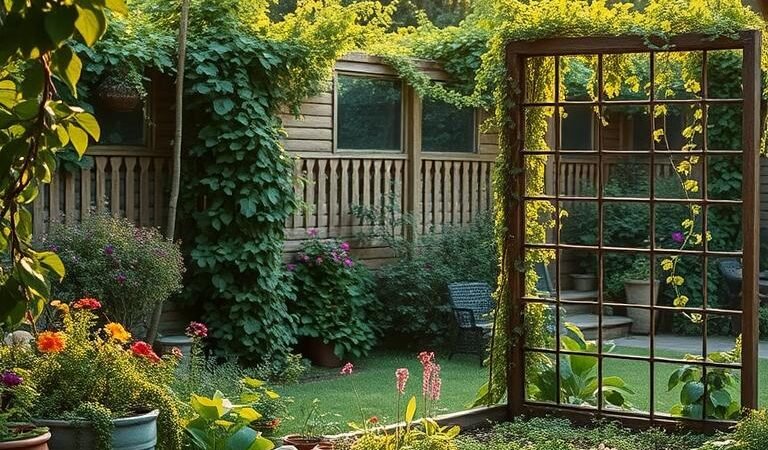
Transforming your outdoor space into a beautiful and functional area can be a rewarding experience. With DIY garden projects, you can create a unique and personalized space that reflects your style.
I have discovered that undertaking DIY projects in your garden not only saves costs but also provides an opportunity to express your creativity. The 14 projects covered in this article range from small container gardens to larger structural elements, catering to different skill levels and enhancing both the aesthetic appeal and functionality of your garden.
These projects can be completed over time, allowing for a gradual transformation of your outdoor space. Whether you’re a beginner or an advanced DIY enthusiast, you’ll find a project that suits your needs.
Key Takeaways
- Transform your outdoor space with DIY garden projects.
- Enhance the aesthetic appeal and functionality of your garden.
- Choose from 14 projects suitable for different skill levels.
- Complete projects over time for a gradual transformation.
- Express your creativity and personalize your outdoor space.
Transform Your Outdoor Space with DIY Garden Projects
DIY garden projects are the perfect way to give your outdoor space a personal touch without breaking the bank. Your outdoor space is an extension of your home, and personalized touches are mandatory to express your vibe. No outdoor space is too big or too small for DIY projects.
DIY garden projects can breathe new life into tired or uninspiring outdoor spaces, turning them into extensions of your home’s living area. By incorporating personalized garden projects, you can express your unique style and create a space that reflects your personality. Whether you have a tiny balcony or a sprawling backyard, these projects can be scaled and adapted to fit your needs.
Some common garden problems that DIY projects can solve include privacy issues, lack of seating, and insufficient planting space. Moreover, gardening and DIY work have therapeutic benefits, including stress reduction and the satisfaction of creating something beautiful. By repurposing materials and reducing waste, DIY projects can also promote sustainable gardening practices.
| Benefits of DIY Garden Projects | Description |
|---|---|
| Personalization | Express your unique style and create a space that reflects your personality |
| Sustainability | Repurpose materials and reduce waste |
| Therapeutic Benefits | Reduce stress and enjoy the satisfaction of creating something beautiful |
https://www.youtube.com/watch?v=EODKKwVgWQk
By incorporating DIY garden projects into your outdoor space, you can increase your home’s value and curb appeal while creating a more enjoyable outdoor living area. With a little creativity, you can turn your garden into a vibrant oasis that reflects your personal style.
Essential Tools and Materials You’ll Need
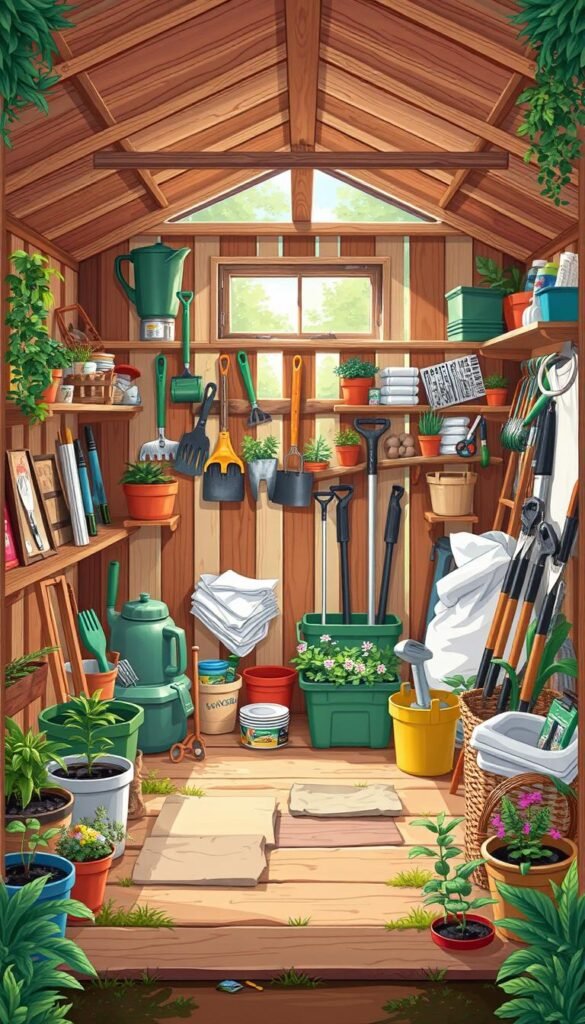
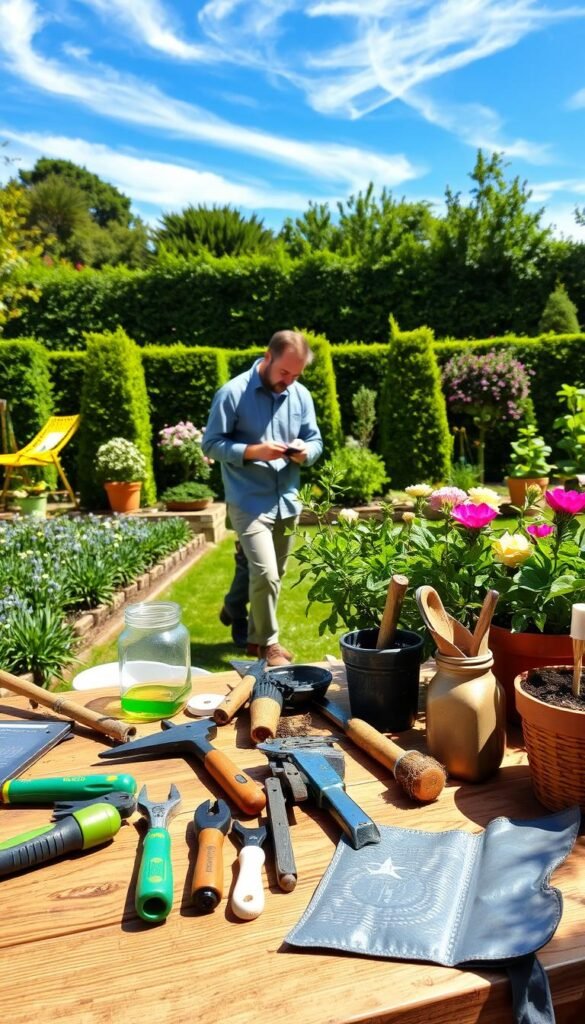
Gathering the essential tools and materials is the first step in bringing your DIY garden projects to life. To get started, you’ll need a set of basic hand tools such as trowels, pruners, and hammers. These tools are fundamental for most DIY garden projects and will help you with tasks like planting, pruning, and building.
For more complex projects, you may need power tools like drills, saws, and sanders. There are many budget-friendly options available, and it’s worth investing in good-quality tools that will last. When it comes to materials, you’ll commonly use wood (treated lumber, pallets, reclaimed wood), metal, concrete, and plastic. Consider eco-friendly and upcycled material options to reduce the environmental impact and cost of your projects.
Don’t forget to prioritize safety by using protective gear like gloves, eye protection, and appropriate footwear. You can source materials inexpensively from salvage yards, online marketplaces, and hardware store sales. Properly storing and maintaining your tools will ensure they last longer and perform better for future garden projects.
For beginners, consider starting with a starter tool kit that includes the essentials. This will help you get started without a significant upfront investment. As you progress with your DIY projects, you can gradually add more tools and materials to your collection.
DIY Garden Projects for Small Spaces
With a little creativity, small outdoor spaces can become stunning gardens. When it comes to gardening in compact areas, thinking vertically is key. By utilizing walls and overhead spaces, you can transform overlooked nooks into vibrant mini gardens.
Vertical Pallet Planter
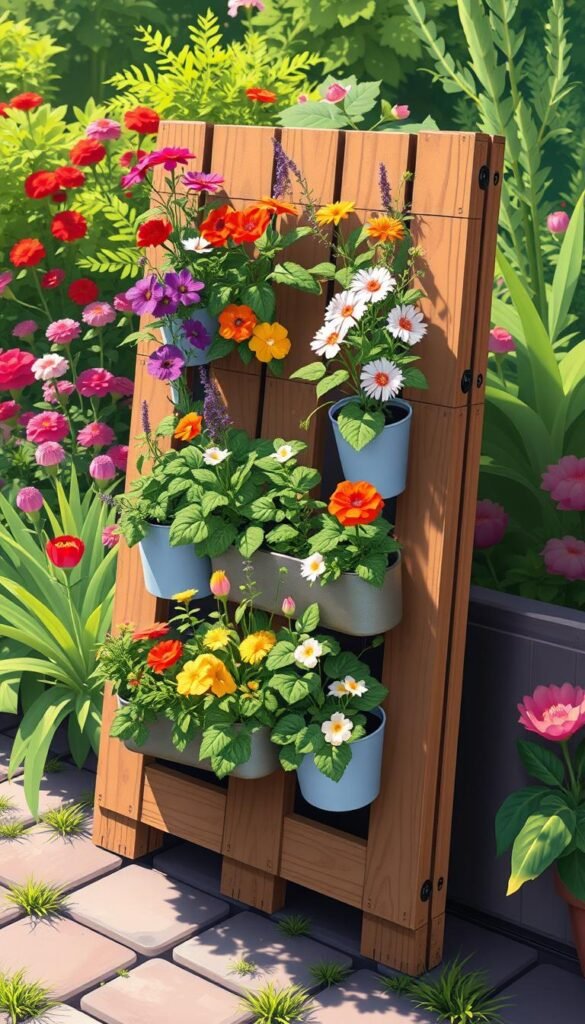
Creating a vertical pallet planter is a great way to maximize space. Start by preparing a wooden pallet, adding a backing to prevent soil from falling through, and creating planting pockets. This planter is perfect for growing herbs, flowers, or small vegetables. To make it, you’ll need a pallet, some wooden planks, a hammer, and nails.
Hanging Mason Jar Herb Garden
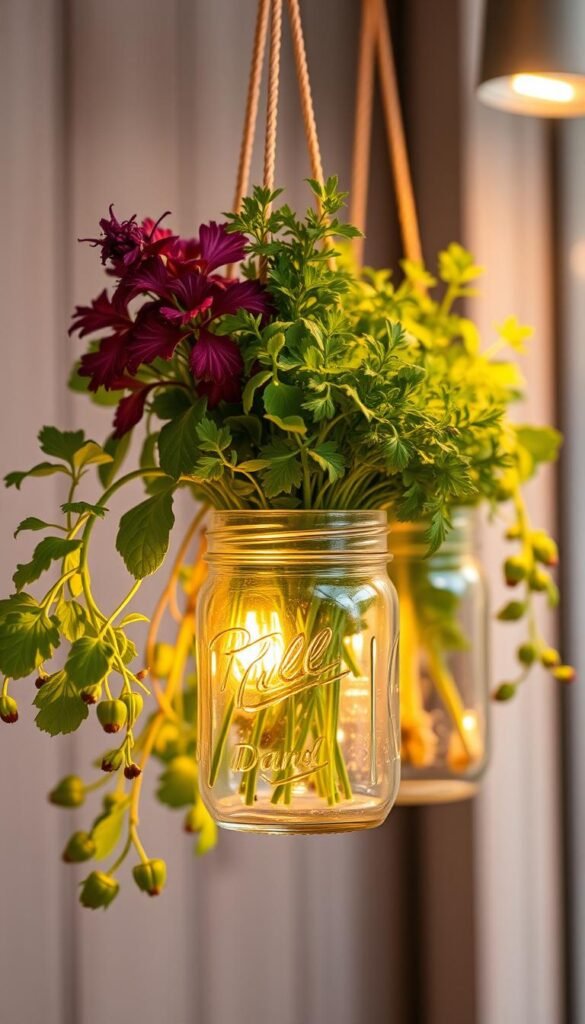
A hanging mason jar herb garden is another excellent DIY project for small spaces. To create this, you’ll need mason jars, twine or rope, and a few basic tools. Simply fill the jars with soil, plant your chosen herbs, and hang them in a sunny spot. This project not only saves space but also adds a decorative touch to your garden.
Other space-saving garden projects include window boxes, railing planters, and tiered plant stands. These projects can significantly impact the appearance and functionality of compact outdoor areas, making them more enjoyable and inviting.
Creating a Relaxing Water Feature: Terracotta Pot Fountain
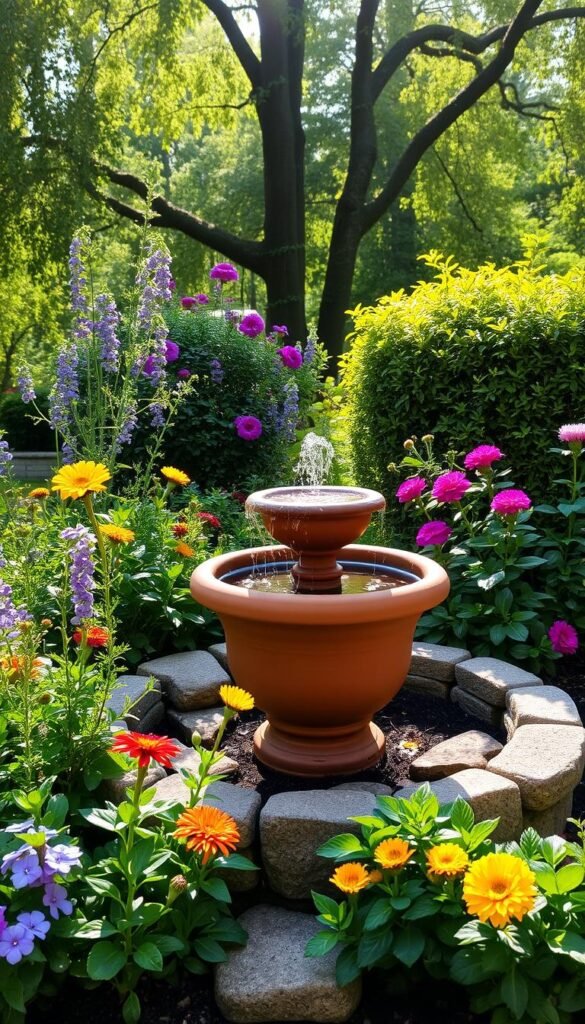
Transform your garden into a serene oasis with a DIY terracotta pot fountain. This impressive-looking garden decoration is surprisingly simple to make. A mini water feature is a great project for your outdoor deck, patio, or balcony.
Water features add a sensory dimension to gardens through the soothing sound of flowing water and reflective visual qualities. I’ll guide you through creating a terracotta pot fountain, including materials and assembly instructions. Various design options are available, from simple stacked pots to elaborate arrangements.
Technical aspects to consider include pump selection, water circulation, and electrical safety. To keep your fountain running smoothly, regular maintenance is necessary, including cleaning and winterizing. Plant companions like water-loving plants can enhance the feature, and even a small water feature can attract beneficial wildlife.
The sound of water can mask unwanted noise, creating a more peaceful environment. With these tips, you can create a beautiful and calming terracotta pot fountain in your garden.
Build Your Own Rustic Potting Bench
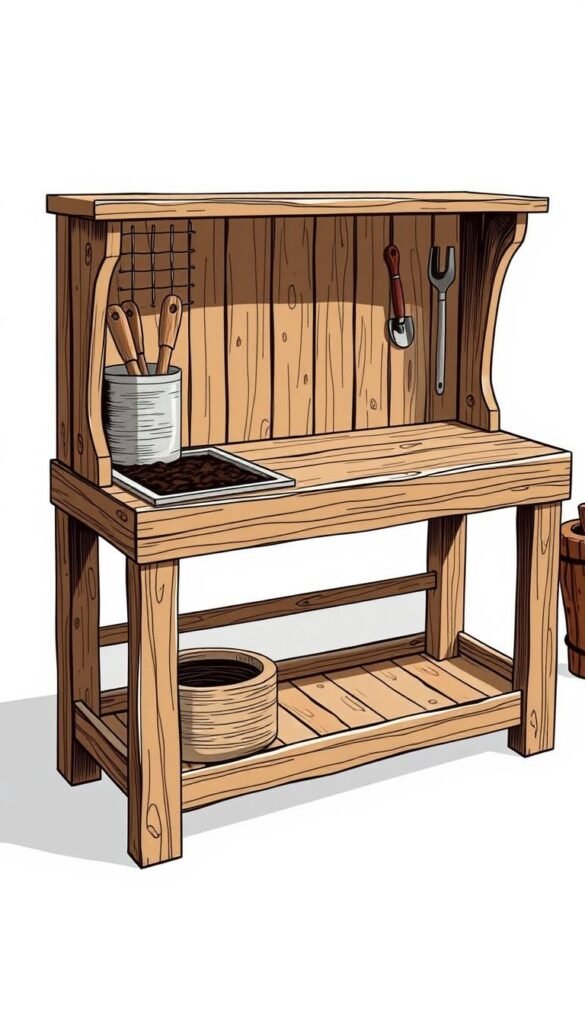
Having a dedicated potting bench in your garden can significantly boost your gardening efficiency and organization. This versatile, easy-to-make workbench is perfect for the shed or backyard, serving as your ideal companion for gardening tasks.
A DIY potting bench offers multiple benefits, including improved ergonomics and efficiency in garden tasks. By building your own bench, you can create the perfect height for comfortable working, avoiding back strain during garden chores.
To build a rustic potting bench, you can use either reclaimed wood or new lumber. Consider design features such as a soil containment area, tool storage, shelving for pots, and a water-resistant work surface to enhance functionality.
Different construction methods can be employed based on your skill level, ranging from simple designs that require basic tools to more complex benches with drawers and cabinets. You can also customize the potting bench to fit your specific space and needs, including fold-down options for small gardens.
To protect the wood from weather and potting soil, apply a suitable finish. This will extend the life of your bench, making it a durable addition to your garden. Moreover, a potting bench can double as an outdoor serving station for entertaining when not being used for gardening tasks.
By following these guidelines and plans, you can complete this project and enjoy the benefits of having a dedicated potting area in your garden.
Personalized Stepping Stones for Garden Pathways

With a few simple materials, you can make decorative stepping stones that enhance your garden’s beauty and functionality. Personalized stepping stones are not only a great way to add character to your garden path, but they also provide stable footing.
There are several methods for creating stepping stones, including concrete casting, mosaic techniques, and embossed designs using textured mats. To get started, you’ll need a few basic materials: a rubber doormat, sand topping mix, and a stepping stone mold.
To make basic concrete stepping stones, follow these steps: mix the sand topping mix with water, pour the mixture into the mold, and add your personal touches. You can embed meaningful objects, add handprints or footprints, or incorporate colorful glass pieces to make your stepping stones unique.
When placing stepping stones in your garden, consider spacing, layout patterns, and integration with existing landscape elements. To ensure safety, proper installation techniques and maintenance are crucial. Creating a series of stepping stones can be a fun family project, with each member designing their own stone.
By using stepping stones, you can create focal points or lead visitors to special areas of your garden, enhancing the overall design. With a little creativity, your garden pathway will become a beautiful and functional part of your outdoor space.
DIY Projects to Attract Wildlife to Your Garden
Transforming your garden into a wildlife haven is easier than you think with these DIY projects. By creating a welcoming environment for birds, bees, and other beneficial insects, you can enhance the biodiversity of your garden.
Upcycled Bird Feeder
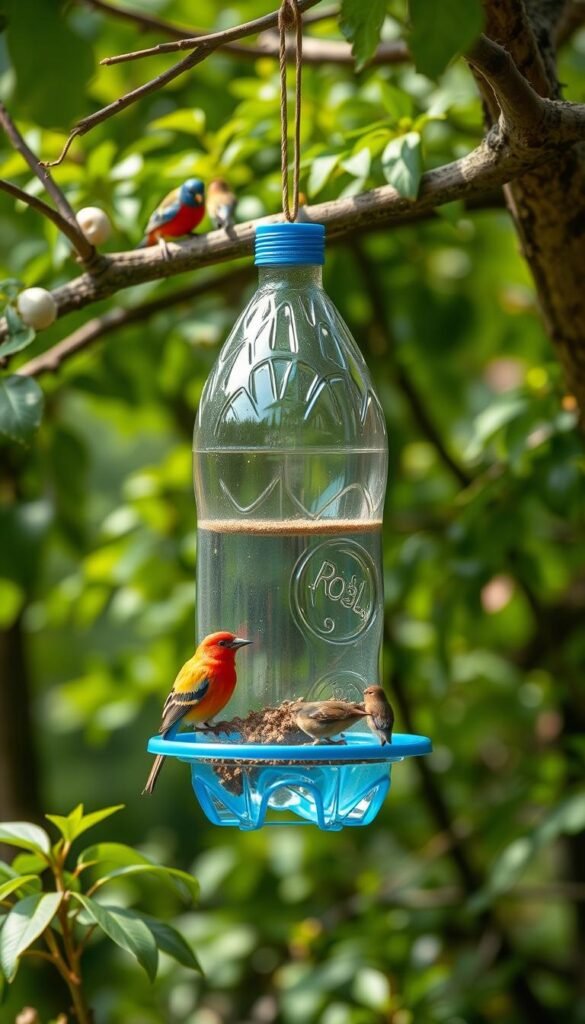
Create a colorful bird feeder using common household items. Fill a wooden log or a plastic bottle with birdseed, and hang it from a tree using a sturdy rope. You can also add a roof or a tray to protect the seed from the elements.
Bee and Bug Hotel
Build a bee and bug hotel using natural materials like bamboo, straws, or wood. Create a structure with different compartments to accommodate various beneficial insects. This will provide them with a cozy habitat and encourage them to stay in your garden.
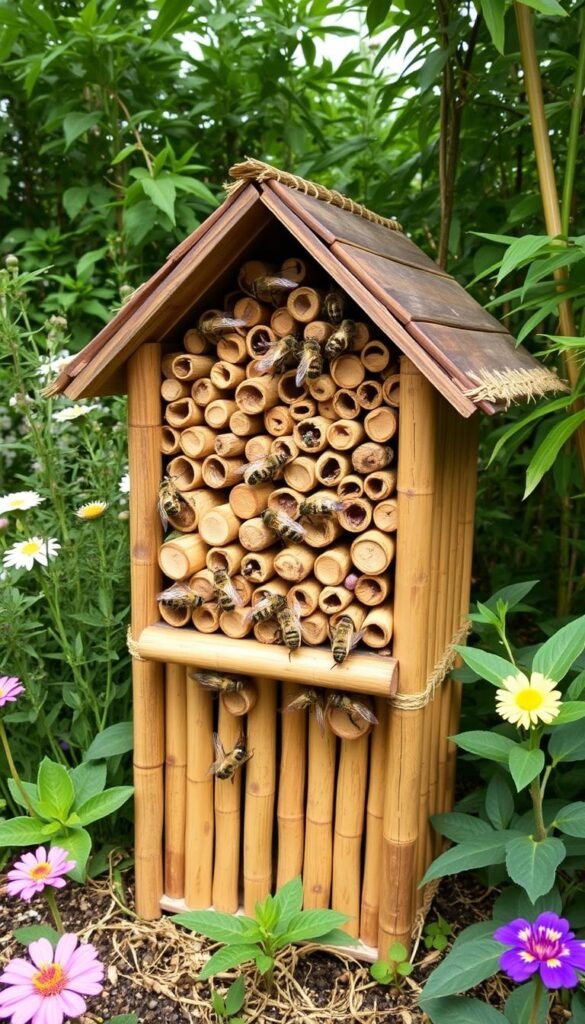
By incorporating these DIY projects into your garden, you can attract a variety of wildlife and create a thriving ecosystem. Regular maintenance will ensure that these habitats remain safe and effective over time.
Raised Garden Beds for Vegetable Growing
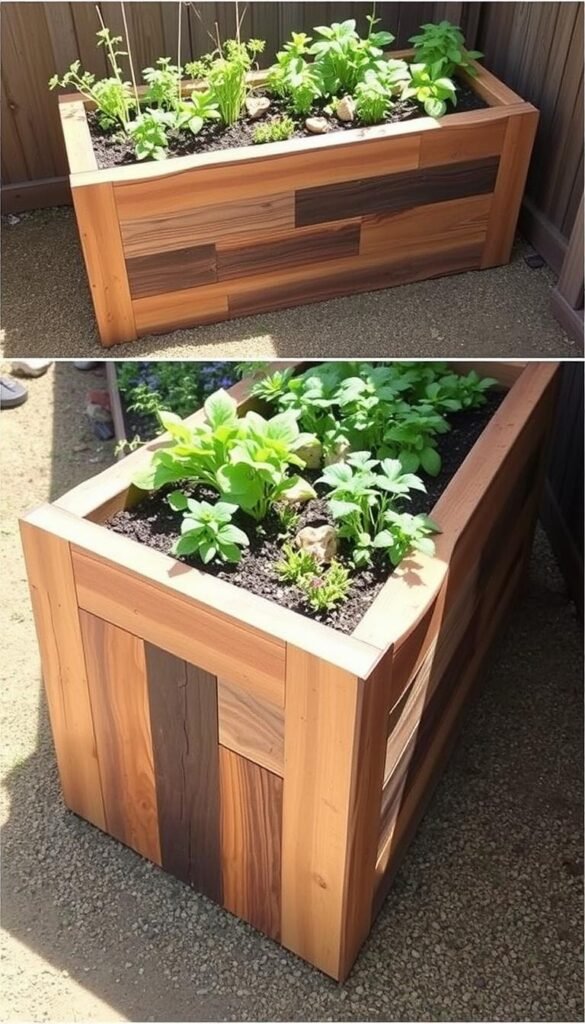
Raised garden beds are a game-changer for growing vegetables, offering numerous benefits that can enhance your gardening experience. By building a raised bed, you can improve drainage, control soil quality, reduce back strain, and extend the growing season.
To build a raised bed, you can use various materials such as wood, concrete blocks, or metal. Each material has its pros and cons. For instance, wood is a popular choice due to its aesthetic appeal and ease of use, while concrete blocks offer durability and a unique look.
When designing your raised bed, consider the optimal dimensions based on your reach and the space available. Ergonomic considerations are crucial to ensure easy access to all parts of the bed. A well-planned garden layout can significantly enhance your vegetable yield.
For a successful vegetable gardening experience, the soil mix is critical. A recommended mix includes a blend of compost, topsoil, and amendments. Efficient planting layouts such as square foot gardening and companion planting can also maximize your garden‘s productivity.
Irrigation is another key aspect of raised bed gardening. Options range from simple watering cans to sophisticated drip irrigation systems. To extend the growing season, consider using cold frames, row covers, and strategic planting timing.
Regular maintenance, including soil replenishment, crop rotation, and winter preparation, will keep your raised garden bed productive year after year. This project not only enhances your garden but also provides a rewarding gardening experience.
Illuminate Your Garden with DIY Solar Light Projects
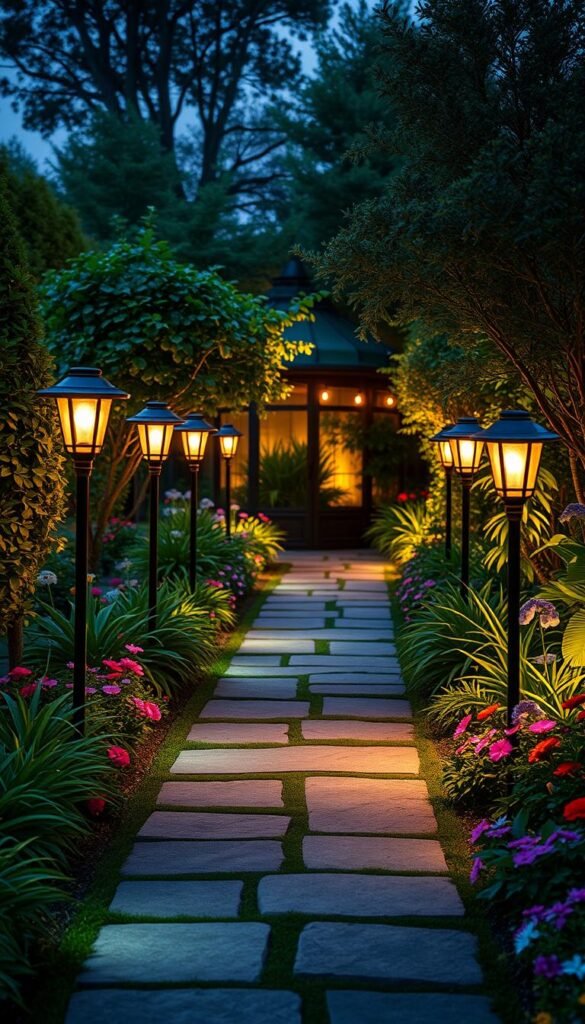
DIY solar garden lights can elevate your outdoor space, making it shine even after dark. With a few simple materials, you can create beautiful and functional lighting that enhances your garden’s ambiance.
Strategic lighting can transform a garden after dark, creating ambiance, highlighting features, and extending the usability of outdoor spaces into the evening. Solar lighting is an excellent choice for gardens due to its energy efficiency, ease of installation without wiring, and environmental benefits.
I will guide you through several DIY solar light projects, from simple path lights to more elaborate hanging fixtures. You can upcycle common items like mason jars, wine bottles, and tin cans into unique solar light fixtures with minimal cost.
When placing garden lighting, consider safety for pathways and techniques for highlighting garden features. You can also incorporate solar lights into existing garden structures like trellises, fences, and trees for a more integrated look.
To keep your solar lights functioning optimally, remember to maintain the batteries, clean the solar panels regularly, and ensure they are weatherproofed. With these tips, you can enjoy your garden even after darkness falls.
Garden Art from Repurposed Items
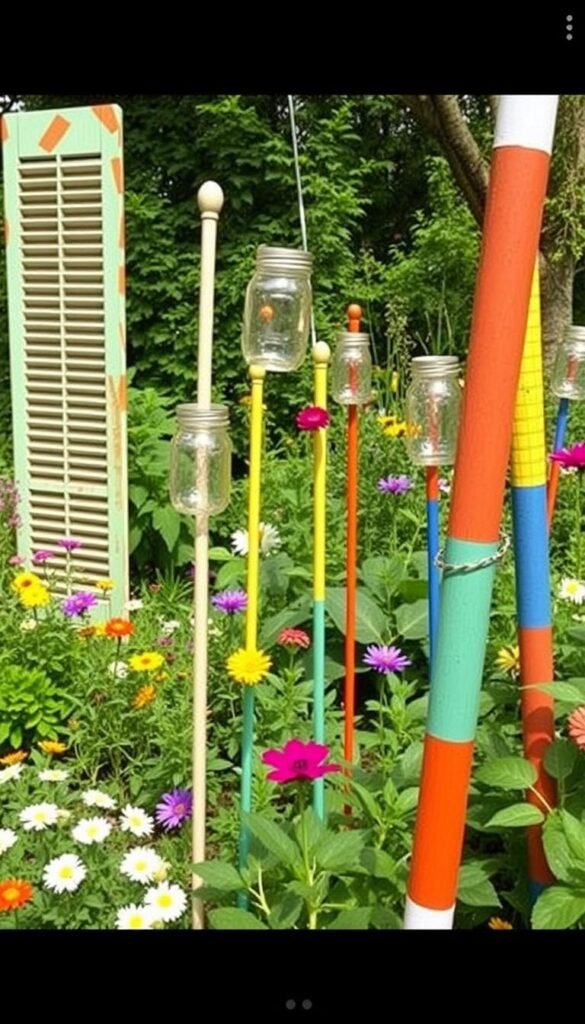
Creating garden art from items you might otherwise throw away is a fantastic way to give your garden a personal touch. By repurposing common household items and “junk” into artistic garden features, you can reduce waste while creating unique decorations that add visual interest and personality to your outdoor space.
Garden art can be created in various forms, such as sculptures from old tools, mosaic features from broken pottery, or whimsical art from household items. These projects not only add beauty to your garden but also tell stories, preserve memories, or showcase personal interests, adding deeper meaning to your outdoor space.
To ensure that your repurposed garden art withstands outdoor conditions, it’s essential to use appropriate techniques for weatherproofing. This includes using suitable paints, sealants, and protective measures. By doing so, you can enjoy your garden art for years to come.
Repurposed garden art can be incorporated into different garden styles, from formal to cottage to contemporary designs. To avoid a cluttered appearance, it’s crucial to create a cohesive theme. You can achieve this by selecting art pieces that complement your garden’s overall aesthetic.
Garden art can also serve functional purposes, such as screening unsightly views or disguising utility fixtures. By creatively repurposing items, you can solve problems while adding beauty to your landscape.
Build a Mini Greenhouse from Old Windows
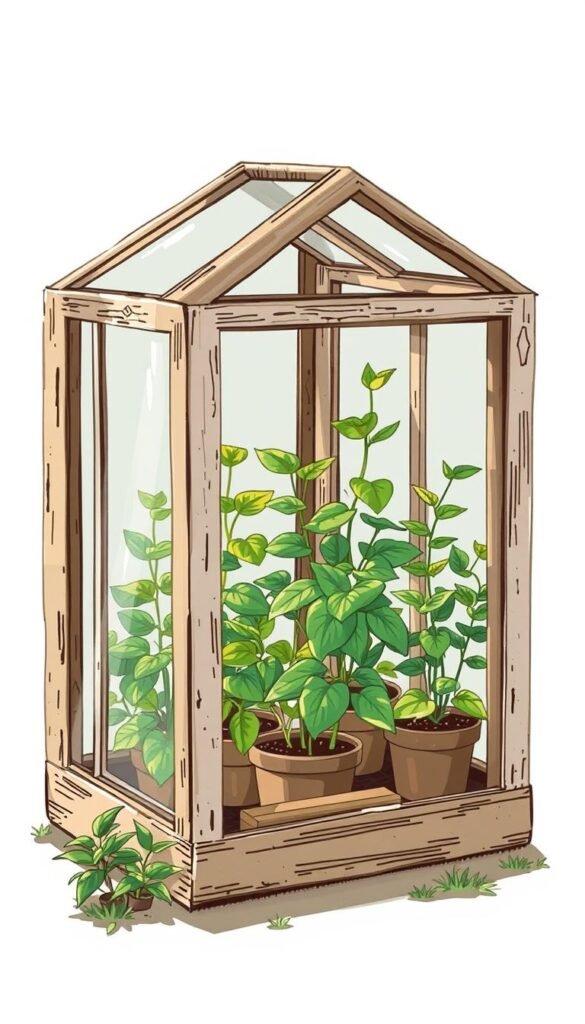
Building a mini greenhouse from old windows is a fantastic DIY project for garden enthusiasts. This eco-friendly endeavor not only recycles old materials but also provides a nurturing environment for your plants. By repurposing old windows, you can create a mini greenhouse that extends your growing season and protects tender plants from harsh weather.
A mini greenhouse can be as simple as a cold frame or as elaborate as a freestanding structure. The key is to utilize available materials and space effectively. When building your mini greenhouse, consider the placement carefully to ensure optimal sun exposure and wind protection. Accessibility for maintenance is also crucial.
The materials needed for this project include bricks, cement, lumber, and old windows. You can source these materials from local hardware stores or salvage yards. The construction process involves assembling the frame, attaching the windows, and ensuring proper ventilation. With a little creativity, you can maximize the space within your mini greenhouse using shelving and strategic plant placement.
To manage your mini greenhouse effectively, consider techniques for ventilation, irrigation, and temperature control. Seasonal adjustments, such as summer shading and winter insulation, will also help in maintaining an ideal environment for your plants. By following these guidelines, you can enjoy a thriving garden year-round.
Create Comfortable Outdoor Seating: DIY Garden Bench
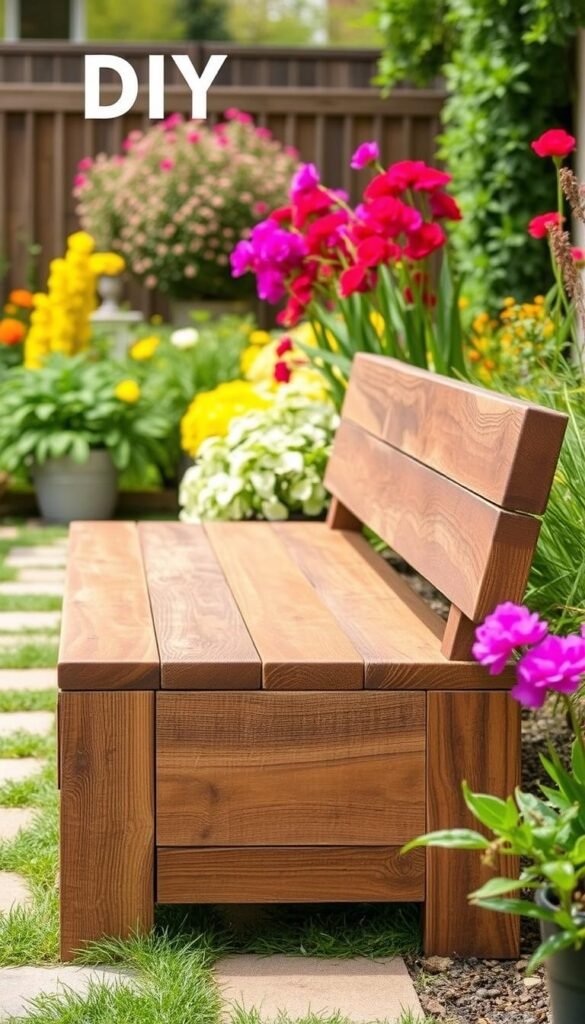
Creating a comfortable outdoor seating area is essential for transforming your garden into a cozy retreat. A well-designed DIY garden bench can be the perfect addition to your outdoor space, providing a comfortable spot to relax and enjoy your surroundings.
To build a basic garden bench, you can use common materials like lumber and concrete blocks. Consider the ergonomics and weather resistance of your design to ensure it is both comfortable and durable.
You can customize your bench with personal touches like decorative details, cushions, or built-in planters. When placing your garden bench, think about creating conversation areas or taking advantage of views.
To protect your DIY garden bench from weather damage, apply appropriate paints, stains, or sealants. Consider adding built-in storage for cushions, tools, or garden supplies to enhance functionality.
By incorporating a DIY garden bench into your outdoor seating area, you can create a welcoming space that invites relaxation and enjoyment.
Support for Climbing Plants: Decorative Trellis
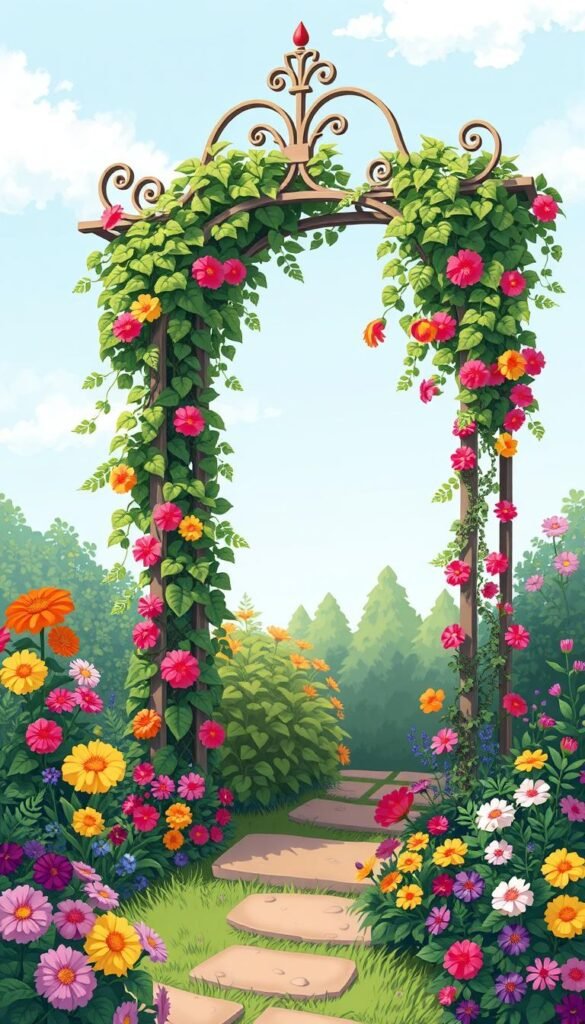
Creating a decorative trellis is a simple DIY project that can add both functionality and beauty to your garden. A trellis serves as a support system for climbing plants, helping them grow upwards and thrive.
Trellises can be made from various materials, including wood, metal, bamboo, and repurposed items. The choice of material depends on durability, aesthetic appeal, and the specific needs of your plants. For instance, a wooden trellis can add a rustic touch to your garden, while a metal trellis can provide a more modern look.
When building a trellis, consider the type of climbing plants you want to support. Flowering vines like clematis or roses require sturdy support, while edible climbers like peas or cucumbers need a trellis with a grid pattern. Evergreen climbers like ivy can be trained on a trellis to create a year-round screen.
To ensure stability, trellises should be securely anchored to the ground or a wall. Proper installation techniques will help prevent the trellis from toppling over under the weight of mature plants. Training plants on a trellis involves initial guidance, pruning, and regular maintenance.
Trellises can also be used creatively beyond traditional wall-mounted designs. Freestanding screens, arbors, and container integrations are just a few examples. Strategically placed trellises can solve garden problems like screening unsightly views or creating privacy.
Privacy Screen with Integrated Planters
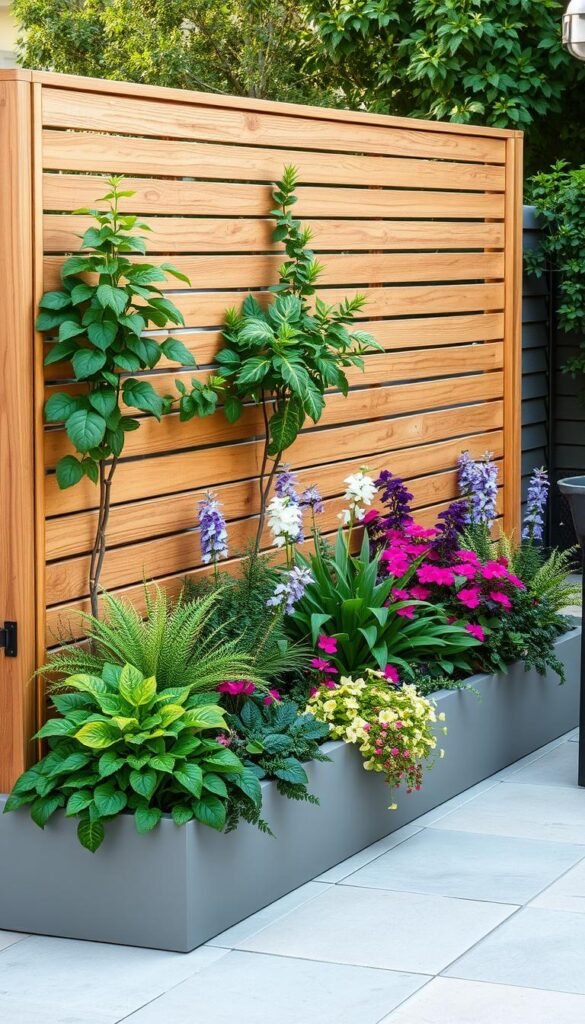
A privacy screen with integrated planters is not just a functional element; it’s also a stunning garden feature that can elevate your outdoor living experience. By incorporating planters into your privacy screen, you can create a living wall that doubles as a beautiful DIY project.
One of the primary benefits of a privacy screen is its ability to define different areas within your garden space. When integrated with planters, it adds an extra layer of visual interest and can help block unwanted views, creating a more intimate atmosphere.
To build a privacy screen with built-in planters, you’ll need to consider several factors, including the materials list, construction techniques, and finishing options. You can choose from various design styles, ranging from modern slatted designs to traditional lattice patterns, to match your garden aesthetic.
When selecting plants for your privacy screen planters, consider factors like sun exposure, root space, and visual impact. This will ensure that your privacy screen not only provides seclusion but also enhances the beauty of your garden.
By following these guidelines and tips, you can create a stunning DIY privacy screen with integrated planters that transforms your outdoor space into a serene retreat.
Troubleshooting Common Issues in DIY Garden Projects
Troubleshooting is an essential part of any DIY garden project, helping you overcome common problems. As you work on your garden projects, you may encounter structural issues, such as unstable constructions or warping wood, which can be addressed with proper anchoring and regular maintenance.
Plant-related challenges are another common issue. For instance, invasive root systems or overgrown plants can damage your garden structures. To mitigate this, choose plants that are suitable for your project and regularly prune them to maintain their shape.
Weather-related damage is also a significant concern. To protect your investments, use weather-resistant materials and apply protective coatings to your garden projects. Regular inspections can help identify potential issues before they become major problems.
By being aware of these common issues and taking proactive steps, you can ensure the longevity and success of your DIY garden projects. Whether it’s addressing structural problems, managing plant growth, or protecting against the elements, effective troubleshooting is key to a thriving garden.
“A well-maintained garden is not just about aesthetics; it’s also about creating a sustainable and enjoyable outdoor space,” says a seasoned gardener. By following these troubleshooting tips, you can enjoy your garden for years to come.
Conclusion: Enjoying Your Transformed Outdoor Space
Having discovered 14 unique DIY garden projects, you’re one step closer to turning your outdoor space into a vibrant extension of your home and personality. These projects offer a transformative potential that can collectively create a cohesive and personalized garden that resonates with your style.
Start with DIY projects that match your current skill level and gradually take on more challenging builds as your confidence grows. Remember, the journey to a beautiful garden is ongoing, with seasonal projects and maintenance routines to keep your transformed space vibrant year-round.
By investing time in your garden, you’ll not only enhance your outdoor space but also experience the personal satisfaction and wellness benefits that come from spending time in a self-created environment. So, let your imagination bloom alongside your flowers, and enjoy the process of transforming your life through DIY gardening.